
The tech industry is constantly progressing and finding new ways to provide value to consumers and enterprises. Its dynamic nature makes it essential to identify and understand key trends, the best market opportunities, and the vendor ecosystem.
Technology market research provides the timely, actionable business intelligence needed to optimize product portfolios, resonate with customers, and scale your business. Everyone, from a marketing leader to a C-suite executive, can benefit from comprehensive, data-driven research.
This article walks you through the benefits, methodologies, and real-world examples of technology market research. We also provide guidance on what characteristics you should look for in a research partner.
Key Takeaways
- Technology market research supports strategic business goals. It empowers companies to make expert-backed decisions based on key trends, market shifts, and competitive dynamics.
- Research helps maintain market relevance. Technology intelligence regarding competitor updates and customer behavior ensures vendors identify revenue opportunities and tailor products to buyer expectations.
- Tech advisory comes in various forms. Some of the most common research methodologies are qualitative analyses, market forecasts, competitive benchmarking, customer surveys, and strategy calls.
- Selecting the right partner boils down to several key factors. You can’t just choose any research vendor. The best tech market research firms demonstrate trust, offer differentiated services, stay forward-looking, and offer long-term strategic advisory.
Table of Contents
- What Is Technology Market Research?
- How Can Companies Benefit from Technology Market Research?
- Which Technology Market Research Methodologies Are Used?
- What Should You Look for in a Technology Market Research Partner?
What Is Technology Market Research?
Technology market research is the qualitative and quantitative analysis of tech solutions that is used to identify Information Technology (IT) trends, optimize product development, and better understand customers. Whether you’re a tech vendor looking to size up the market opportunity for a particular technology or an enterprise requiring deployment advisory, research is essential.
Tech market research is gathered through:
- Interviews with industry stakeholders
- Comprehensive surveys
- Proprietary data
- Secondary sources (e.g., government data)
- Company analysis
Once this information is collected by a technology consulting firm, it’s time for the most valuable insights to be shared. This can come in the form of technology reports, market forecast spreadsheets, competitive assessments, presentation slide decks, and similar publications.
Beyond research publications, technology analysts leverage their industry findings to consult key decision makers on the best path forward.
For example, ABI Research analysts not only present their findings to executive strategy teams on strategy calls, but they also contextualize the findings. That way, the tech market research can be translated into actionable steps. Depending on a client’s goals and pain points, this could be anything from marketing to a new region to implementing a disruptive technology.

How Can Companies Benefit from Technology Market Research?
Market research equips companies with the technology intelligence required to identify emerging opportunities, resonate with customers, fend off competitive threats, avoid risks, and successfully implement tech solutions.
These benefits are outlined in more detail below.
Identify Emerging Opportunities
The tech industry is constantly evolving. Companies that fail to keep up with the latest trends will struggle to stay afloat. Trend analysis is at the heart of tech market research, empowering organizations to act upon the most emergent opportunities.
For instance, telecommunications market research findings indicate a growing appetite for 5G-as-a-Service (5GaaS) business models. Mobile Network Operators (MNOs) can use ABI Research’s 5GaaS market forecasts and industry case studies to chart their strategic blueprint accordingly.
Understand Your Customers
A recent Salesforce report found that 73% of buyers expect companies to understand their unique needs and expectations. Enhancing awareness of customer behaviors is one of the main benefits of tech market research. It can:
- Highlight customer pain points
- Assess brand sentiment
- Identify tech investment urgencies
- Prioritize preferred payment models
- Enhance user experiences
For technology providers, market research can gauge customer perception of specific features or functionalities. It can also uncover the evolving ways in which Business-to-Business (B2B) buyers wish to engage with tech vendors and the service models they prefer. It’s all about adapting to alterations in customer expectations.
Maintain a Competitive Edge
Being a technology leader means staying one step ahead of competing firms. Tech market research supports this essential action by analyzing competitors and consolidating their findings into an easy-to-understand format. Outsourcing this process saves clients enormous time and resources. Research also provides the tech intelligence needed to identify and mitigate risks early.
Competitive intelligence reveals:
- How your customers feel about competing brands
- The tech innovations used by industry leaders
- Differentiation opportunities
- Areas of improvement
- Untapped vertical segments
These findings can transform product design, content marketing campaigns, and customer outreach.
For example, imagine for a moment that you’re a product manager at a data center cooling company. Through competitive intelligence, you may identify certain niches that have yet to be fully seized by other vendors. Equipped with that knowledge, your organization could modify a liquid cooling solution’s design, publish relevant case studies, and emphasize this unique value to sales prospects.
Beyond competitive analyses, market research identifies disruptive tech trends that your competitors may not be clued in on. Consequently, your organization can anticipate seismic shifts and begin preparing for them long before your industry peers even recognize them. Examples include upcoming regulatory risks, waning support for a technology standard, or market consolidation.
Successfully Implement Technology
Market research is pivotal to successful technology implementations. Implementing new technology solutions can be met with various challenges, which can manifest in many forms. Common implementation obstacles include:
- A lack of in-house IT skills
- Employees may resist change
- Interoperability issues with existing systems
- Poor strategic planning
- Unable to prove Return on Investment (ROI) to executives
- Ethical concerns for Artificial Intelligence (AI) projects
Market research provides much-needed clarity about technology implementations.
Tech advisory firms like ABI Research share their decades of expertise with clients to guide them on new deployments. Research analysts have deep knowledge of common pitfalls, proven tactics, and the vendor landscape. This ensures that your organization experiences a smooth transition to new technology solutions, selects the right partners, and establishes long-term value from investments.
Which Technology Market Research Methodologies Are Used?
The most effective methodologies for conducting technology market research include qualitative analyses, market sizing, competitive benchmarks, customer surveys, and strategy calls.
Here’s an overview of each method, along with real-world examples.
Qualitative Analysis
Qualitative analysis helps understand the “who, what, where, why, and how” of emerging technologies. This type of market research covers the market drivers, technical and human requirements, future outlook, and vendor landscape for a tech product.
Example
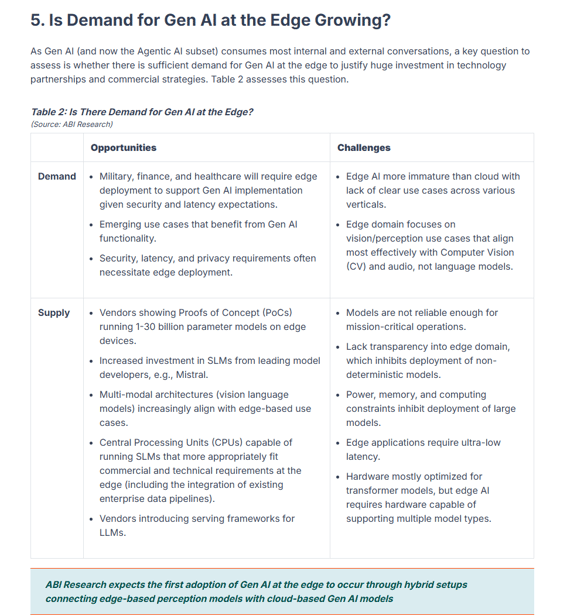
ABI Research’s application analysis reports provide a holistic overview of disruptive technologies. The typical report includes sections on key trends, key forecasts, and key companies and ecosystems. Further value is provided through evaluating enabling technologies and sharing analyst recommendations. These qualitative analyses help the tech industry better understand the use cases, revenue opportunities, and challenges associated with a specific solution.
And AI-based tools, such as Ask ABI, accelerate the time it takes for organizations to find exactly what they need from reports. You can simply ask the tool what you want to know and it will generate an easy-to-understand answer.
Market Sizing
Market sizing fuels technology roadmaps. The hard data provided by demand forecasts reveal technology spending patterns across regions, specifications, use cases, industry verticals, and other segments. This kind of research enables a tech company to put a quantifiable number on its:
- Total Addressable Market (TAM)
- Serviceable Available Market (SAM)
- Serviceable Obtainable Market (SOM)
This data-driven research pinpoints the potential and realistic sales opportunity for a technology product.
Example
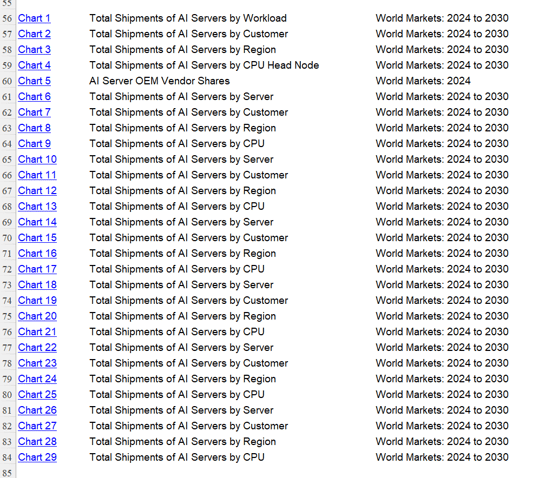
ABI Research’s market data overviews deliver the deep, actionable insights that empower companies to launch tech products with confidence and precision. Unlike most technology advisory firms, our market forecasts are extremely granular. For example, our AI data servers forecast evaluates the market size by workload, customer type, region, server type, and Central Processing Unit (CPU) type.
Competitive Benchmarking
Competitive benchmarking is a hallmark of technology market research, offering insight into competitors ‘ product portfolios, go-to-market strategies, and technical competencies. Comparing portfolios assists with identifying market gaps, potential partners, and winning tactics.
These research deliverables allow tech companies to learn what the best-in-class vendors do to capture large market shares and then apply that to their own business strategy. For market leaders, a competitive benchmark identifies small and mid-size market players poised to disrupt your respective industry. These company assessments can also be used by technology enablers/users and System Integrators (SIs) to identify potential collaborations.
Example
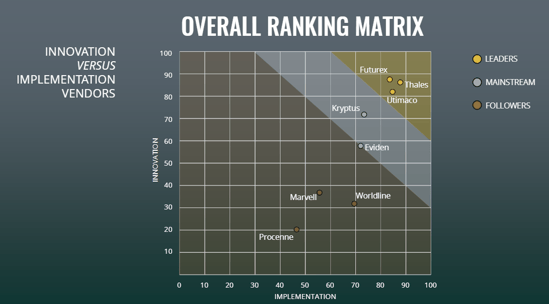
ABI Research offers products called competitive rankings. Our technology experts analyze multiple vendors and assign a score to each one based on specific innovation and implementation criteria. Many tech industry stakeholders already have a good idea of who the market leaders are. But competitive rankings go two steps further by presenting comprehensive insight into why they lead and why others are lagging behind.
Surveys
An effective way to collect data on customers is to conduct surveys. With a defined goal in mind and the right questions asked, surveys can provide unique insight into a target audience’s technology habits and attitudes.
The quantitative and qualitative data gathered from surveys are used by technology companies to optimize outreach to specific customer segments. Moreover, survey results inform the tech industry of what features and functionalities customers crave.
Example
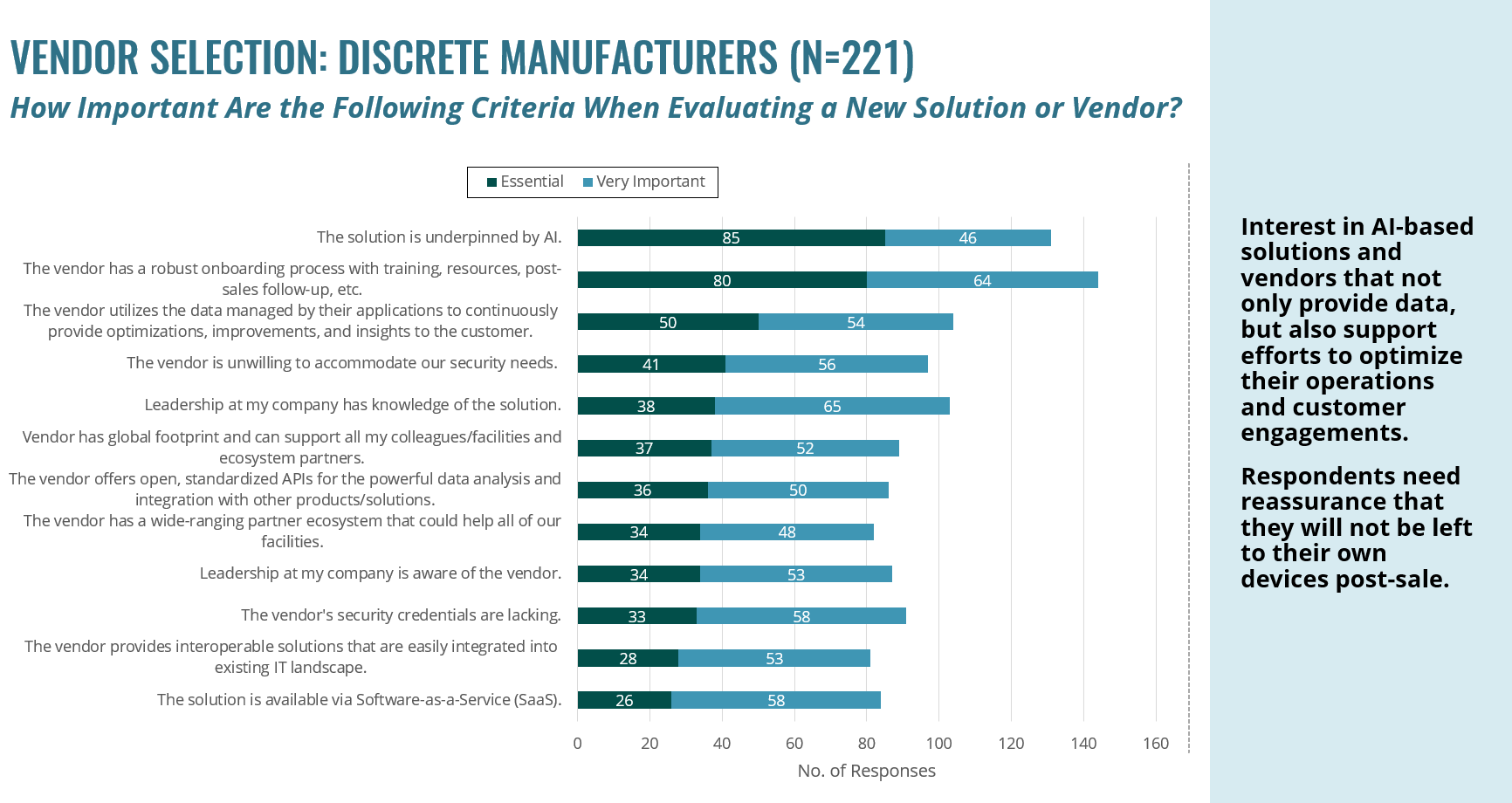
A notable example is ABI Research’s The State of Technology in the Manufacturing Industry survey. It asks industry decision makers various questions about their technology implementations. Using the survey results, industrial automation companies can identify top tech priorities, major pain points, and investment plans. Our clients’ product marketing teams leverage this valuable feedback to adjust brand messaging and solution development.
Similarly, our Supply Chain Survey 2025 sheds light on what technologies are top of mind for supply chain leaders in the United States and Mexico. Respondents’ feedback shapes the future of logistics tech development, such as visibility platforms and AI integration.
Strategy Calls
Strategy calls are designed to align technology strategy with the most impactful trends. They are also an excellent opportunity for technology providers to ask a research analyst their most dire questions. This type of tech market research adds a personal touch to tech consultancy services, fostering stronger client-consultant synergy. During strategy calls, tech companies benefit from:
- Real-time guidance
- Competitive analysis
- Market updates
- Planning sessions
- Q&A
Nobody wants to walk into a meeting with their Chief Executive Officer (CEO) and not have any good answers at hand. Research strategy calls prepare IT executives to present fact-based insights and clear, actionable next steps.
Example
ABI Research clients tap into exclusive strategy sessions with our global team of analysts, discussing the data and timely insights needed to achieve their technology goals. Leveraging their latest studies, Analyst Inquiries walk you through the most relevant trends, forecasts, and competitive dynamics. This explicit knowledge is conducive to aligning technology priorities with business objectives. Additionally, our strategy sessions provide clients with an opportunity to tell us which technology intelligence they would like featured in our syndicated market research.

What Should You Look for in a Technology Market Research Partner?
When it’s time to select a tech market research partner, there are several characteristics to look for:
- Trustworthiness
- Differentiation
- Future foresight
- Strategic partner
The most value will come from partnering with a technology advisory firm that demonstrates these capabilities.
Trustworthiness
Trustworthiness is a non-negotiable when selecting a tech research provider.
According to ABI Research President and Managing Director, Stuart Carlaw, trust is built upon two axes. “The first is built by clearly understanding the key success factors and goals of the client organization and individual personas, and aligning insight and information to aid them in their decision-making processes,” says Carlaw. He emphasizes the need to provide the unvarnished reality of any situation and be prepared to have difficult conversations with the client. This requires honesty, integrity, and open dialogue throughout the relationship.
Carlaw states that the second axis on which trust is built is “continuing to deliver differentiated insight in a timely fashion that has a meaningful impact on business outcomes.” In other words, the technology research partner is capable of offering insight that is relevant, tailored, and delivered in a way that makes it easier for the client to improve their success chances.
To get a sense of a potential research partner’s trustworthiness, visit the company website to read blogs, review client case studies, and look for social proof from clients in your industry.
Trustworthiness also extends to transparency in terms of research methodology. Clients deserve clear visibility into complex technology strategies across the value chain, grounded in validated insights and transparent assumptions.
Our Chief Research Officer (CRO), Malik Saadi, stresses, “Trusted research partners deliver methodical, consistent analysis with explicit risk assessment, translating technology complexity into clear insights while ensuring that all critical dimensions and underlying frameworks are fully disclosed.” He continues, “The most valuable advisory partnerships deliver actionable intelligence grounded in unwavering analytical rigor, ensuring every strategic insight is both credible and defensible under scrutiny.”
Trusted research partners deliver methodical, consistent analysis with explicit risk assessment, translating technology complexity into clear insights while ensuring that all critical dimensions and underlying frameworks are fully disclosed. The most valuable advisory partnerships deliver actionable intelligence grounded in unwavering analytical rigor, ensuring every strategic insight is both credible and defensible under scrutiny.
Malik Saadi, Chief Research Officer ABI Research

Differentiation
Tech research firms differentiate themselves to cater to specific niches and offer unique value. For example, Gartner Hype Cycles visually represent the maturity and deployment of emerging technologies. Such findings help clients understand the evolution of technology and pinpoint when more focus should be placed on specific solutions.
Another example of differentiation is ABI Research’s unique positioning within the technology landscape. The company serves as an intermediary between technology solution providers and end-market companies that implement said solutions. By advising both halves of the tech world, ABI Research is a key facilitator of successful implementations and demand stimulation for disruptive technologies.
Future Foresight
Anticipating future trends is a highly regarded quality for a tech research firm. A research partner should be able to provide a window into upcoming market shifts, empowering clients to prepare accordingly.
For instance, ABI Research’s Tariff Forecasts and Fallout whitepaper provides future technology forecasts after the United States’ “Liberation Day.” With tariffs increasing supply chain costs, the whitepaper evaluates the impact on product demand across various technology categories. These data-driven analyses help clients adjust their strategic planning around geopolitical reality and minimize the financial impact.
In addition to demand forecasts, a technology research partner should also be able to help you foresee shifts in:
- Regulations
- Standardization
- Vendor landscape
- Customer preferences
- Technology designs
Strategic Partner
Lastly, you want to choose a market research firm that will be a strategic partner, advising you at every stage of your organization's technology journey. Many tech research firms merely provide consulting services for a short period of time, limiting the positive impact achieved. These firms are unlikely to dedicate the level of commitment your business objectives demand over time.
Instead, you should prioritize a market research firm that offers long-term tech consulting services. Their ongoing support, rapport building, and brand familiarity are essential to being a strategic partner who ensures that organizational goals continue to be achieved.
Saadi says, “The real value clients should seek lies in quantifiable market outcomes that adapt and remain strategically relevant as markets transform, providing immediate operational clarity and sustained competitive advantage over time.”
But how do you know if a tech research firm is a strategic partner?
There are a few general indicators:
- Quick response times to client questions
- Insight delivery according to promised schedules
- Regular contact from research and sales teams
- Staying up-to-date on company developments
- Asking relevant questions at events and webinars
But above all, the most important indicator that a technology research firm is a strategic partner is when discussions with clients move beyond just talking about the market or competition. Carlaw posits that a strategic research partner “discusses what the client should specifically be doing at a tactical and strategic level to meet their goals and be successful in a very specific and relevant way.” He concludes by saying, “If a vendor is sharing insight and suggesting potential actions to a client that is unsolicited, then there is a good chance the vendor is in a good place to be a strategic partner.”
Find Your Next Tech Market Research Partner
Technology market research is the fuel that drives digital transformation. Timely insight and ongoing advisory services are crucial to aligning the tech industry with customer demand. Furthermore, research analysts share the expertise required for smooth technology deployments across manufacturing, telecommunications, data centers, supply chains, and semiconductor industries.
ABI Research stands at the intersection of both technology solution providers and end users. Our team provides tech intelligence and consultancy for the following stakeholders:
Frequently Asked Questions
What is technology market research?
Technology market research is the qualitative and quantitative analysis of tech solutions used to identify IT trends, optimize product development, and better understand customers. It involves collecting insights through interviews, surveys, proprietary and secondary data, and company analysis to support decisions across product strategy, marketing, and deployment.
Why do technology companies and users need market research?
Technology companies and users need market research to identify emerging opportunities, resonate with customers, outperform competitors, avoid risks, and ensure successful tech implementations. It equips decision-makers with actionable intelligence to enhance product design, marketing strategies, deployment planning, and overall competitiveness.
What are some examples of technology market research?
Examples of tech market research include application analysis reports, market forecasts, competitive benchmarking (like vendor rankings), customer surveys, and strategy calls. These tools help startups and household brands alike understand market dynamics, evaluate competitors, assess customer needs, and align technology initiatives with business goals.
What are the advantages of technology market research?
Key advantages of tech market research include the ability to:
- Act on emerging trends before competitors
- Deeply understand customer expectations and pain points
- Benchmark against rivals and uncover growth opportunities
- Navigate technology implementation challenges successfully
- Build a forward-looking strategy grounded in expert guidance
Start with free research
Subscribe to ABI Research's weekly newsletter for access to our latest Analyst Insights, whitepapers, report samples, webinars, and more.

 Dominique Bonte