
Fleet safety is a critical aspect of protecting drivers, maximizing Return on Investment (ROI), and preserving brand image. Yet many commercial fleet operators lack the means to identify risky driving behaviors and quickly resolve issues. Trucks and buses are increasingly at the center of fatal road incidents in the United States, highlighting the need for cutting-edge technology that can help prevent road accidents.
ABI Research has been studying the case for Artificial Intelligence (AI)-based video solutions to boost fleet safety. These digital tools detect high-risk driver behaviors, issue audible warnings, and provide the in-cab monitoring capabilities needed to enhance safety coaching efforts. Beyond that, video AI is helpful for demonstrating fault in accidents, helping reduce insurance/legal costs.
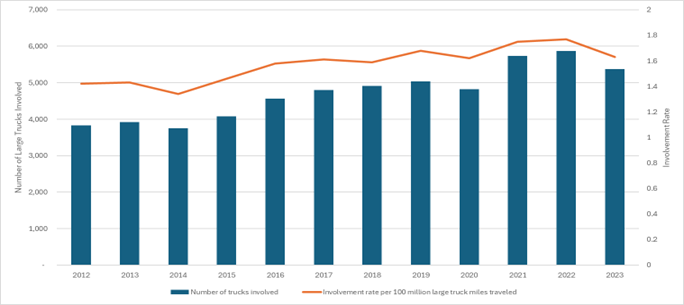
Chart 1: Large-Truck Involvement in Fatal Crashes, 2012 to 2023
(Source: National Safety Council)
What Are the Top Fleet Safety Challenges?
Fleet safety is often undermined by a range of challenges across the technical, human, and organizational lenses. Some of the top roadblocks to fleet safety are:
- Road Safety Incidents Are on the Rise: The number of fatal crashes involving a large truck has increased exponentially over the last decade. In 2023, 5,375 fatal road incidents involved a large truck or bus, accounting for 11% of all fatal motor vehicle accidents in the United States. As reshoring projects ramp up, safety remains a major challenge for commercial fleets with more trucks on the road.
- Distracted and Fatigued Driving: Fatigue is the cause of roughly 13% of serious large-truck crashes, as per a Federal Motor Carrier Safety Administration (FMCSA) study. The vast majority of truck drivers admit to sometimes driving while drowsy, with almost 50% saying they have fallen asleep behind the wheel. Distracted driving is another safety issue for commercial fleets. Using a handheld device while driving is consistently one of the top reasons why a large truck is involved in a road incident.
- Limited Coaching Tools: Fleet safety efforts are typically reactive in nature, minimizing the impact of coaching endeavors. The best outcome is one where fleet safety is taught in near real-time as opposed to after a safety incident has already occurred. Video telematics is essential to monitoring drivers and identifying risky behaviors on the fly.
- Accident-Related Costs and Insurance Premiums: Truck crashes cost organizations a significant amount of money. Financial expenses stem from vehicle repairs, higher workers’ compensation, lost cargo, downtime, and legal liabilities. Moreover, insurance premiums, which continue to be more expensive, can skyrocket after a severe crash.
How Video AI Helps Improve Fleet Safety and Minimize Financial Risks
Leading fleet telematics vendors, such as Verizon Connect, integrate AI-powered video into their enterprise-grade solutions. Video AI provides a variety of fleet safety benefits:
Real-Time Risk Detection
AI-powered dashcams detect risky driving behaviors like tailgating, phone use, lane drifting, or not wearing a seatbelt. When unsafe actions are detected, the fleet management system immediately alerts the driver, prompting them to adjust their behavior before an accident occurs. For example, Verizon Connect customers report a 50% reduction in phone-based driver distractions using the AI Dashcam.
Fatigue Detection
Driver tiredness is one of the biggest causes of truck accidents. Video AI can track eyelid movement, head position, and yawning to detect early signs of fatigue. If a driver looks drowsy, the system will quickly suggest they refocus or take a break, helping fleets avoid costly accidents and follow Hours-of-Service (HOS) rules while protecting driver health.
Driver Coaching and Scoring
Downloaded video data provides an excellent opportunity to perform safety scores, measuring how often and how severe risky driving events are. Fleet managers can use these scores to give drivers personalized coaching at the right time. AI-powered analytics dashboards visualize safety performance gains over time, enabling organizations to map fleet safety improvements with specific coaching endeavors.
Incident Exoneration
Multi-angle video provides clear, time-stamped evidence of driver accountability. This helps prove whether or not the driver was at fault, saving companies from expensive lawsuits and higher insurance costs. Truck drivers also feel more secure knowing their employer has the tools needed to exonerate them. Case in point, Verizon Connect’s Extended View Camera (EVC) gives fleet managers nearly 360-degree visibility with rear, side, and cargo views to fully understand safety incidents.
Reducing Disputed Claims
AI-tagged video footage can speed up insurance investigations, disprove fraudulent claims, and help ensure fair outcomes. By validating events like collisions or traffic violations, fleets can resolve disputes faster while discouraging false reports.

Conclusion
Video AI has clear value for fleet operators. According to Verizon Connect’s 2025 Fleet Technology Trends Report, 75% of fleets say that in-cab video has helped them meet their goal of improving driver safety. Beyond keeping workers safe, AI-powered dashcams enable organizations to avoid false insurance claims and reputational damage.
Introducing video AI across fleet operations will not happen overnight. Driver resistance to new technologies is a notable hindrance to digital transformation. There are also driver privacy concerns that must be addressed.
Fleet managers and safety teams should start with small-scale deployments of AI dashcams. This allows staff to identify the biggest value drivers and create internal champions for the technology. These early-stage pilot deployments are crucial to gauging employee response, gathering feedback, and integrating video AI into driver coaching initiatives. From there, fleet managers can make a more compelling case for scaling the technology when it’s time to convince key stakeholders within the organization.
For a full analysis of how AI-powered video solutions are revolutionizing fleet safety and how enterprises should approach their deployment, download the ABI Research executive brief Using Video AI to Reduce Risk and Liability
 Dimitris Mavrakis
 Larbi Belkhit