
By Daniel Burge, Energy Analyst & Mark Lydon, Senior Content Manager
Key Takeaways:
- The energy sector’s future depends on digital transformation. As grids face rising demand and renewable integration, digitalization provides the real-time visibility, automation, and forecasting needed to maintain stability and efficiency.
- Smart platforms are streamlining grid operations. From digital twins to AI-enabled Energy Management Systems, utilities can predict issues, optimize resources, and manage assets remotely to cut downtime and improve reliability.
- Partnerships are key to modernization. Working with established technology leaders allows energy providers to accelerate digital adoption, lower operational costs, and transition toward cleaner, smarter, and more resilient grids.
The way we produce, deliver, and consume electricity is undergoing a seismic shift. From the surge in renewables to widespread Electric Vehicle (EV) charging, utilities and energy distributors are being pushed to their limits. But the energy networks built decades ago weren’t designed for this level of complexity, forcing utilities to try to do more with less.
This is where digital transformation becomes essential. It brings the speed, flexibility, and visibility needed to operate a modern grid. Real-time data, intelligent forecasting, and remote monitoring turn today’s challenges into tomorrow’s opportunities. ABI Research forecasts that energy companies will spend US$713 billion on grid digitalization over the next 6 years, hinting at a technological evolution within the industry.
Digital transformation brings clarity to complexity. With advanced tools like digital twins, Artificial Intelligence (AI), and Energy Management Systems (EMSs), energy companies can see what’s happening in real time and plan for the unexpected. Digital platforms from Schneider Electric, Siemens, GE Vernova, Honeywell, and others are driving digitalization by turning raw energy data into smarter decisions.
So, what makes this transition possible? To answer this question, our research analysts have identified the key pillars on which the energy sector’s digital transformation will be built. Understanding these technological foundations is essential for any utility or technology provider aiming to lead the next generation of energy.
Get ABI Research's latest energy market intelligence in our blog.
Challenges in Digitalizing the Energy Industry
The digitalization of the energy sector faces formidable challenges like high investment costs, grid capacity shortages, rigid regulations, and resistance from utilities. These risk delayed electrification and higher energy prices. Accelerating digitalization requires flexible regulations, ecosystem cooperation, modular technology, and new financing models to overcome these barriers and meet net-zero goals. Innovative solutions, such as retrofit approaches and agile organizational structures, can further support digital innovation in energy.
Table 1: Digital Transformation Challenges for the Energy Industry
|
What Is Holding Back Digitalization? |
Risks of Delayed Digitalization |
How Can Digitalization Be Accelerated? |
|
Financing—huge investments needed |
Grid transmission capacity shortage issue will get worse |
Technology suppliers should focus on selling solutions to problems as opposed to hardware and software |
|
Rigid regulatory frameworks |
Worsening skilled employee shortages |
Technology suppliers should assist utilities with implementation and deployment consultancy services |
|
Lack of awareness and understanding of the benefits of digitalization |
Delayed electrification; not meeting 2050 net zero deadlines |
Ecosystem cooperation and open technology platforms; modular and interoperable hardware and software |
|
Conservative and protectionist attitudes at utilities; resistance from aging workforces |
Falling behind on developing technology expertise |
Flexible regulation favoring competition |
|
Lack of competition at both the technology supplier and grid infrastructure levels |
Higher energy prices |
Develop retrofit approaches |
|
Long infrastructure lifecycles of up to 40 years delaying technology upgrades |
Negative impact on economic growth |
Explore new financing tools and business models |
|
Concerns about cybersecurity threats to connected and software-defined critical energy infrastructure |
Holding back the expansion of critical infrastructure such as data centers and Electric Vehicle (EV) charging stations |
New grid infrastructure topologies aligned with new technologies and energy usage patterns |
|
Lengthy design, certification, permitting, commissioning, and infrastructure deployment time frames |
Decreasing competitiveness |
Set up agile organizational structures within utilities |
(Source: ABI Research)
Grid Planning and Operation Software—the Backbone of Modern Energy Management
A core outcome of digital transformation in energy is the ability to effectively plan grid operations. However, adding new energy sources (e.g., solar and wind) to the grid adds greater complexity in managing everything.
There needs to be a way to simplify and centralize disparate grid operations. Utilities and grid operators can achieve this by investing in smart grid technologies that connect energy infrastructure assets and provide visibility into day-to-day operations. The digital solutions adopted by energy companies should provide grid orchestration, outage management, analytics capabilities, and accurate demand forecasting.
The software building blocks of grid planning innovation include the following:
- Advanced Distribution Management System (ADMS): Helps manage the smaller, local power grids that deliver electricity to homes and businesses.
- Energy Management System (EMS): This energy management software oversees the big picture—how energy is produced, moved, and consumed across the entire grid.
- Geographic Information System (GIS): Maps out where all the energy assets (like power lines and substations) are located.
- Distributed Energy Resource Management System (DERMS): Coordinates energy coming from small sources like rooftop solar panels and batteries.
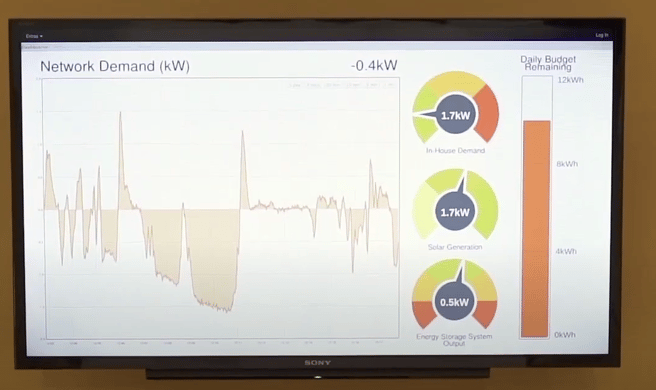
As an example of best-in-class grid planning software, consider Schneider Electric’s EcoStruxure™ suite. In a single plane of glass, energy firms can use an ADMS solution that supports Supervisory Control and Data Acquisition (SCADA), Distribution Management System (DMS), switching, an Outage Management System (OMS), wildfire mitigation, DERMS integration, and grid optimization. This solution was a key reason why ABI Research ranked Schneider Electric first in its competitive assessment of technology providers supporting the energy industry.
SA Power Networks, serving 1.5 million Australian customers, has chosen Schneider Electric as its digitalization partner to address outages that span hospitals, universities, airports, shopping centers, and other critical areas. The comprehensive ADMS integrates 1 million data points across various systems into a single dashboard to simplify the user experience. Being given real-time control and optimization through EcoStruxure™ ADMS enables SA Power Network grid operators to swiftly identify faults in remote regions and restore power to customers in a more timely fashion.
Figure 1: SA Power Networks’ Demand Visualized on a Schneider Electric Dashboard
(Source: Schneider Electric)
Digital Twins for Grid Simulation—Visualizing Evolving Energy Networks in Real Time
Dedicated digital twins—which are virtual replicas of physical assets like substations, power plants, and other grid components—continue to play a crucial role in the energy sector’s digital transformation. These grid simulation tools are malleable, allowing utilities to manipulate the real-time behavior of each grid asset. By merging the physical and virtual worlds, they can track performance more closely, predict when maintenance is needed, and estimate future energy output more accurately. This is especially useful for renewable energy integration due to their intermittent availability. For example, a digital twin of a wind turbine can help forecast how much electricity it will produce under different weather conditions, or alert technicians if a component shows signs of wear and tear.
In addition to asset-specific twins, ABI Research Analyst Daniel Burge speaks to the emergence of grid-wide digital twins that map entire networks. As he states, “Grid-wide twins permit similar simulation, asset management, and optimization functionalities as node-specific twins. As the balancing of energy networks becomes more difficult with the proliferation of flexible edge assets and increased grid reliance on renewable sources, these twins have become vital for larger operators and utilities.”
Many things can cause grid instability. There could be an unexpected spike in electricity demand, cloud cover may hinder solar generation, or a squirrel may even damage a circuit breaker. Burge stresses that the broader view provided by a grid-wide digital twin enables utilities to simulate how the entire grid will react under different scenarios. That way, energy providers can test response strategies, spot vulnerabilities, and optimize energy flow before a real-world problem materializes. Combined, these use cases help design resilient grids that can avoid or quickly recover from disruptions.
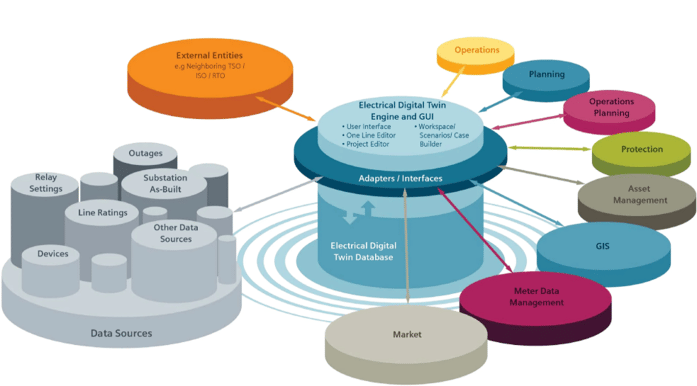
Few technology companies can truly provide a digital twin that accounts for every aspect of the grid. Siemens AG is one of the exceptions, offering a digital twin at every node in the network. Whether it’s a substation or transmission infrastructure, the Siemens Electrical Digital Twin connects the virtual model in a dynamic view of the entire grid network. In turn, energy suppliers and distributors can simulate operational, planning, and maintenance processes.
Figure 2: Visualization of Siemens’ Electrical Digital Twin
Virtual Substations—Automating Processes and Cutting Costs
One of the biggest benefits of digital innovation is being able to automate grid management processes. The energy sector is experiencing a shortage of experienced workers, with 56% of the workforce having less than a decade of service. In other words, the industry is less prepared than ever to resolve substation issues quickly and effectively. Energy companies can overcome this challenge by utilizing digital substations that virtualize the Operational Technology (OT) environment.
Virtual substations represent an evolving technology aimed at enabling grid operators to remotely monitor and manage energy distribution with minimal reliance on human workers and physical hardware. Members of the Virtual Power Automation Consortium (vPAC), like Schneider Electric and ABB, are leading the charge by developing cloud-based digital twins for substations. They aim to generate significant cost savings, enhance flexibility, and transform protection and control systems. While comprehensive, market-ready virtual substations are still in development, these efforts highlight a shift toward more scalable, software-driven grid management solutions.
Innovative grid technologies like these reduce the reliance on workers to physically visit a site for maintenance and equipment updates. Remote configuration of substations not only alleviates skills shortages, but it also improves worker safety. The fewer people who have to physically touch wiring or other potential hazards, the fewer safety incidents.
Figure 3: A Graphic Comparing Digital and Conventional Substations
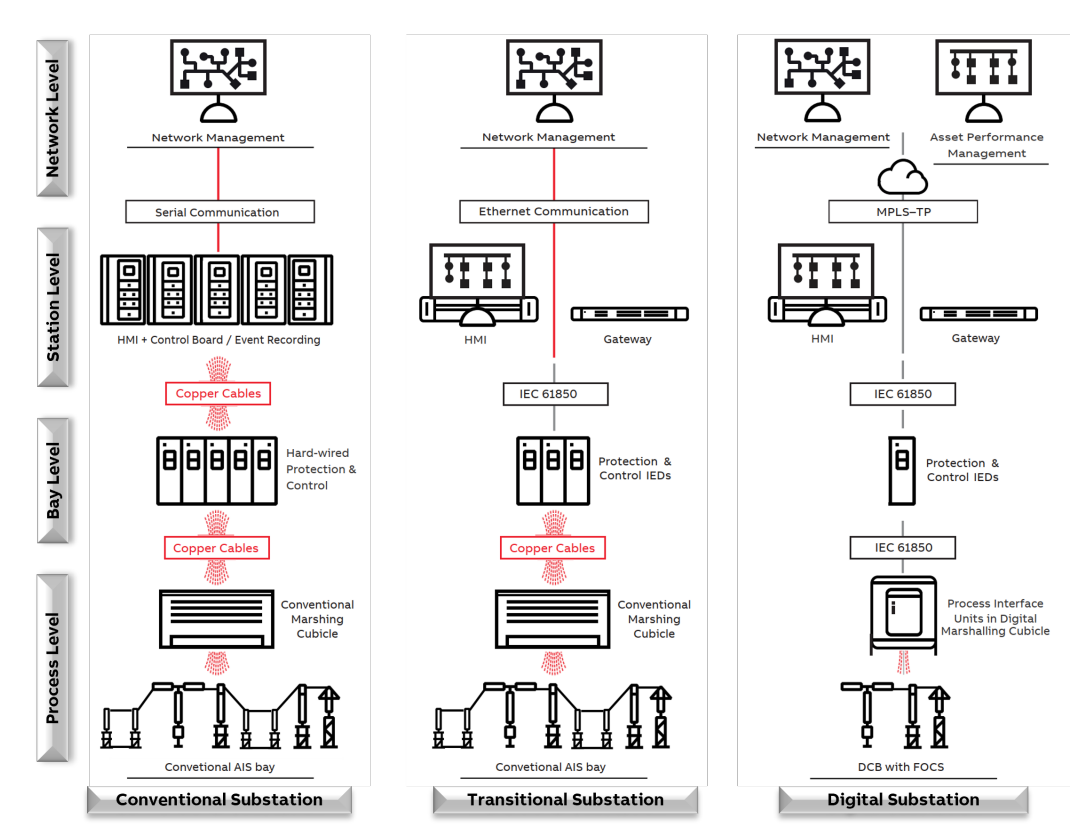
By virtualizing a substation, energy companies can limit costs and improve operational efficiency. With grid operations becoming more complex to manage—thanks to the integration of intermittent clean energy sources, increasing electricity demand, and the spread of privately-owned, distributed assets—virtualization and grid automation tools bring a sigh of relief to the energy sector. Grid operators can now quickly make the necessary adjustments to substation assets with minimal human intervention.
AI and Gen AI—the Brain Behind Smarter Energy Grids
Artificial Intelligence (AI) is a cornerstone of digital transformation across every industry, including energy. Therefore, it’s unsurprising that 74% of energy and utility companies are embracing AI tools to enhance their operations. Energy CEOs hold Generative AI (Gen AI) in the highest regard, expecting it to provide the most value.
Some of the top AI and Gen AI use cases that Burge has evaluated for the energy industry include:
- Improved and cost-effective grid design, planning, and operation
- Predictive maintenance
- Engineer and field/customer service
- Employee enhancement and amplification
- Demand-response forecasting
- Energy trading optimization and automation
- Auditing and permitting
- Compliance reporting
- Capacity maximization
- Cybersecurity detection
AI and Gen AI tools are integrated into the platforms of nearly every leading technology provider targeting energy digitalization. Take GE Vernova, for example, which ABI Research ranked third overall in its latest competitive assessment. The Boston-based company offers the GridOS® software portfolio for grid orchestration. GridOS® leverages AI and Machine Learning (ML) to help utilities run the power grid more efficiently, predict energy needs, and better handle disruptions. These digital tools are already being used for tasks like forecasting renewable energy output, planning grid maintenance, managing vegetation near power lines, and inspecting equipment.
Hitachi Energy’s Nostradamus® is another innovative AI tool at the disposal of energy firms with digital aspirations. The cloud-based AI solution quickly creates accurate forecasts for things like solar and wind generation, energy demand, and market prices. Furthermore, Nostradamus® helps energy companies make smarter decisions, reduce risks, and improve grid reliability by turning complex energy data into clear, actionable insights.
We are past the point of merely collecting data across grid infrastructure. That data are now being centralized and contextualized to simplify the decision-making process.
Related ABI Insights:
Oil Majors’ Retreat from Renewables: Prudent Policy or Commercial Miscalculation?
What Can End Users Do to Prepare for Renewable Technology Material Shortages?
Smart Meter Data—Empowering the Grid Edge
Data are the foundation of digital transformation. Without the millions of data points collected through smart metering and sensorization, there is no way to draw meaningful insights about the grid. These digital technologies facilitate grid edge connectivity, where consumers, prosumers, and the intelligent grid merge.
For the energy industry, behavioral data that originate at the grid edge can fuel more than just grid monitoring applications. Indeed, these data support real-time decision-making, enhance demand-side forecasting, and allow for better flexibility management as the number of electricity prosumers continues to grow. With the rise of rooftop solar, home batteries, and EVs, having a clear, data-driven view of what’s happening at the edge of the grid is essential for maintaining stability and maximizing efficiency.
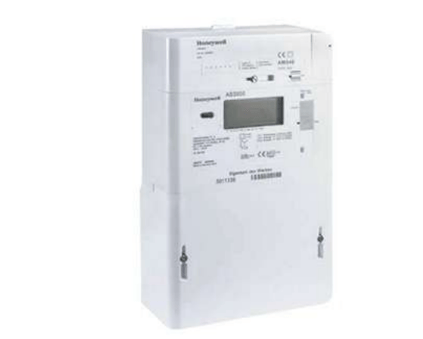
Technology providers offering smart meter data solutions must go beyond basic data collection. The most effective platforms are those that can seamlessly capture, aggregate, and contextualize large volumes of meter data—and turn that data into actionable insights for forecasting, trading, and system optimization. For instance, Honeywell’s deep experience in smart meter technology allows it to offer impressive data utilization capabilities. Within its Forge Performance+ suite, the DERMS can analyze peak energy use by prosumers and help reserve power for high-demand periods. This helps stabilize the energy grid as it enables operators to distribute the appropriate amount of electricity to the right places at the right times.
Figure 4: AS3000 Electricity Meter Connected to AM540 Communication Module
Choosing the Right Digitalization Partner
The energy industry stands at a crossroads. The fusion of increased complexity, growing demand, and mounting costs threatens not just grid stability, but commercial and structural stability for energy firms themselves. Digital transformation has become essential, promising accelerated outage restorations, much-needed automation, grid optimization, and improved customer service outcomes. Even more, digitalization establishes vital, data-led foundations for future grid operations. The Schneider Electrics, Siemens, and GE Vernovas of the world are essential partners to successfully transform the energy sector. The advanced digital tools they provide don’t merely manage grids; they curb escalating expenses and unlock sustainable growth for a power-hungry world.
But before choosing the right partners, you must understand your goals for going digital. Do you need better visibility into your operations? Are you trying to automate processes to overcome labor shortages? Do you want to test new ideas before you implement them? Concurrently, you must understand how digitally mature your company already is. From there, you can build a realistic timeline for scaling your new technology investments and realizing a Return on Investment (ROI).
For an in-depth analysis of the top technology suppliers helping energy companies digitally transform their operations, read ABI Research’s summary of the competitive ranking: Selecting the Right Technology Partner to Digitally Transform Your Energy Grid. This comparative analysis will help you identify the biggest digital innovations in energy and decide which product portfolios align best with your smart grid goals.
 Michael Larner