

NVIDIA's NemoClaw stack brings enterprise-grade security and governance to OpenClaw—and signals a pivotal moment for Agentic AI adoption at scale
The entire Artificial Intelligence (AI) industry has made its annual pilgrimage to San Jose to attend the flagship NVIDIA GTC 2026 event. One of the major messages from CEO Jensen Huang was that the inflection point for AI inference has arrived. In the last 2 years, we have gone from the commercial availability of ChatGPT in 2023, reasoning models in 2024, and to Agentic AI solutions such as Claude Code in 2025. This rapid pace of technology innovation has spearheaded the adoption and innovation with Agentic AI for enterprises, which are now moving from training and testing these solutions, to actually implementing them as part of wider workflows.
The OpenClaw Moment
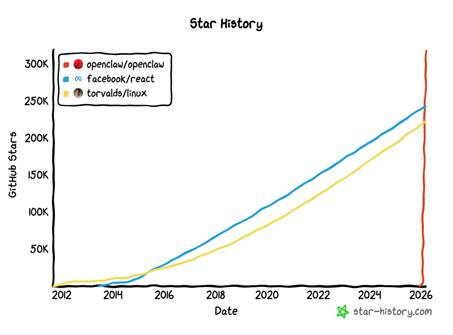
In November last year, Peter Steinberger created an open agent platform that operates like a personal AI assistant. This was officially launched as OpenClaw in January 2026 and has been labeled as one of the most significant technology advancements in AI by NVIDIA. It has quickly become the fastest-growing open-source GitHub repository in history and ushered in the new concept of “claws”—AI agent platforms that have direct access to tools and files on local devices and are fundamental to executing long-running, multi-step workflows. At the same time, many have cited the governance and security concerns around allowing OpenClaw root access to personal devices, especially in an enterprise scenario.
This is why NVIDIA announced its NemoClaw open-source stack at GTC 2026. NemoClaw is an open-source stack that adds privacy and security controls to OpenClaw, leveraging the NVIDIA Agent Toolkit to optimize OpenClaw in a single command. At the heart of this stack is OpenShell, an open-source runtime that acts as the governance layer beneath the claw. It defines how agents access data, use tools, and operate within user-set policy boundaries, leveraging sandbox isolation to prevent agents from overstepping their guardrails.
To ensure that OpenShell is compatible with other enterprise cybersecurity tools, NVIDIA worked closely with companies like Microsoft Security, CrowdStrike, and Cisco.
What This Means for the Market
Jensen’s excitement about the OpenClaw moment was palpable to all during the keynote. NemoClaw aims to address the enterprise security concerns many cited since OpenClaw’s release, especially as it was not initially designed for this purpose.
By making NemoClaw open-source, NVIDIA is aiming to enable enterprises to adopt this technology in a safe, secure manner. Moreover, OpenShell lets cybersecurity firms integrate it natively into existing tools.
NemoClaw will not be the only security platform for agentic systems out there. OpenAI hired Peter Steinberger, so it is likely that a closed-source version from the likes of OpenAI and Anthropic will be unveiled, maybe this year. But for enterprises, it’s similar to the open versus closed AI model conversation: they will utilize a hybrid approach.
Look out for our NVIDIA GTC 2026 whitepaper next week for ABI Research's biggest takeaways from the event. In the meantime, review our key takeaways from MWC Barcelona 2026 and CES 2026.