

MWC Shanghai 2023 returned for the first time since 2021, with over 37,000 people attending from 115 countries and I had the privilege of being one of them. Yes, there were several presentations from leaders in the telecommunications industry and several advanced technology demonstrations being showcased. Many of those demonstrations reflected contributions from the host mobile telcos—China Telecom, China Mobile, China Unicom, and China Broadnet.
The host mobile operators have very much embraced 5G and cloud-based services. For example, China Mobile has moved into the digital content market with its “Migu service,” which offers video content, cloud games, and other premium Internet products. China Telecom has invested in its cloud services portfolio, with revenue from its cloud subsidiary increasing by 107.5% Year-over-Year (YoY) to reach CNY57.9 billion (US$8.1 billion) in 2022. Cloud services were large sources of growth for China Unicom, with revenue growing 121% YoY to CNY36.1 billion (US$5.1 billion).
Globally, cloud services are becoming a major driver of revenue and enabling novel and innovative services. Driven by software services, ABI Research forecasts that global public cloud revenue (consisting of Infrastructure-as-a-Service (IaaS), Platform-as-a-Service (PaaS), Software-as-a-Service (SaaS), and Network-as-a-Service (NaaS)) will grow from US$324 billion in 2020 to over US$778 billion in 2025. Telcos are taking their slice of the market. ABI Research forecasts that global telco cloud spending (generated from infrastructure) will grow from US$8.7 billion in 2020 to US$29.3 billion by 2025.
Given ABI Research’s continued research and interest in 5G and cloud-native development, it was a considerable privilege to not just attend, but also participate as a chair and discussion moderator at the ETSI ISG NFV “Telco cloud-native roundtable.” Many of the deliberations from the roundtable have been summarized in an ETSI blog post.
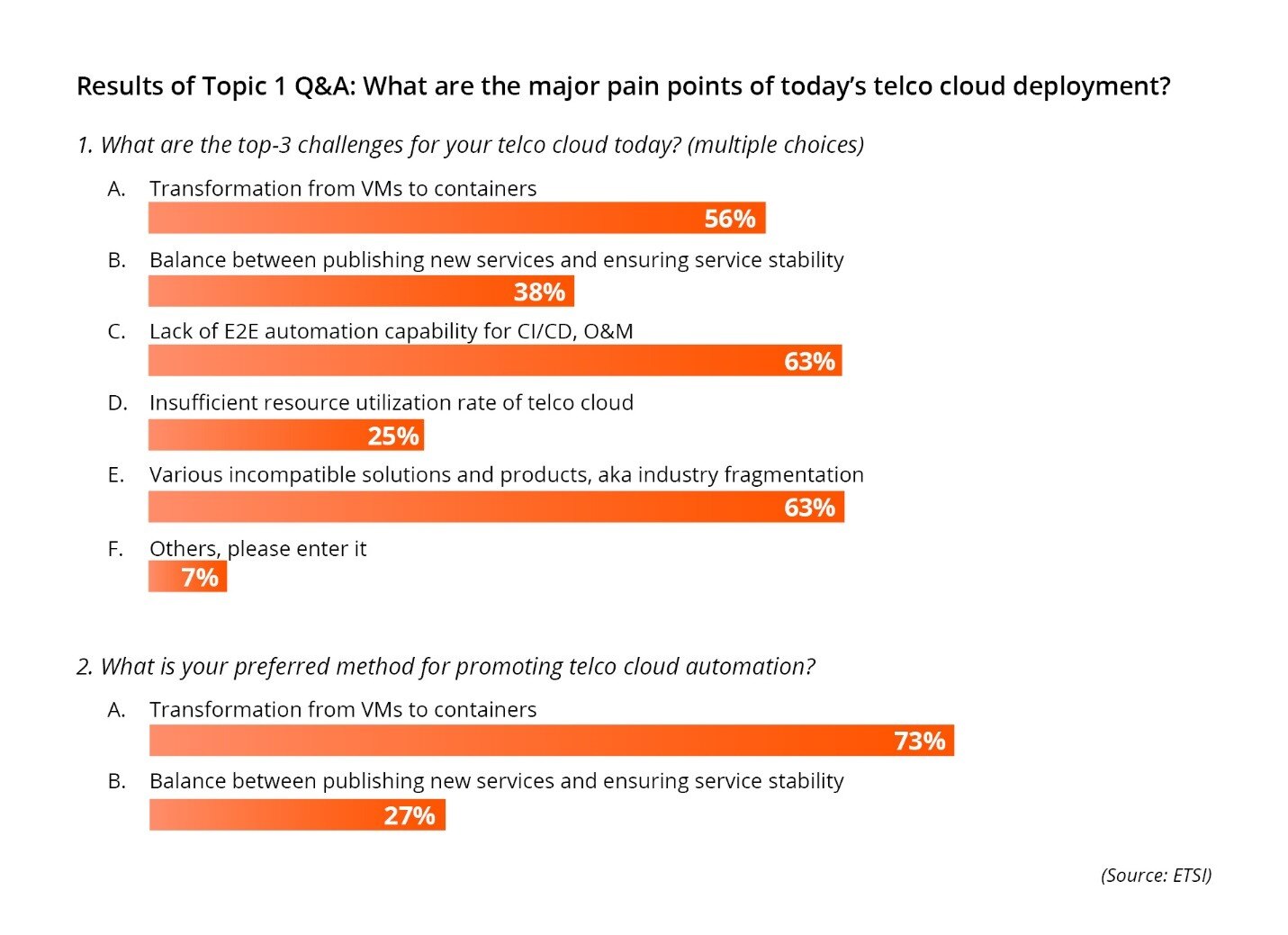
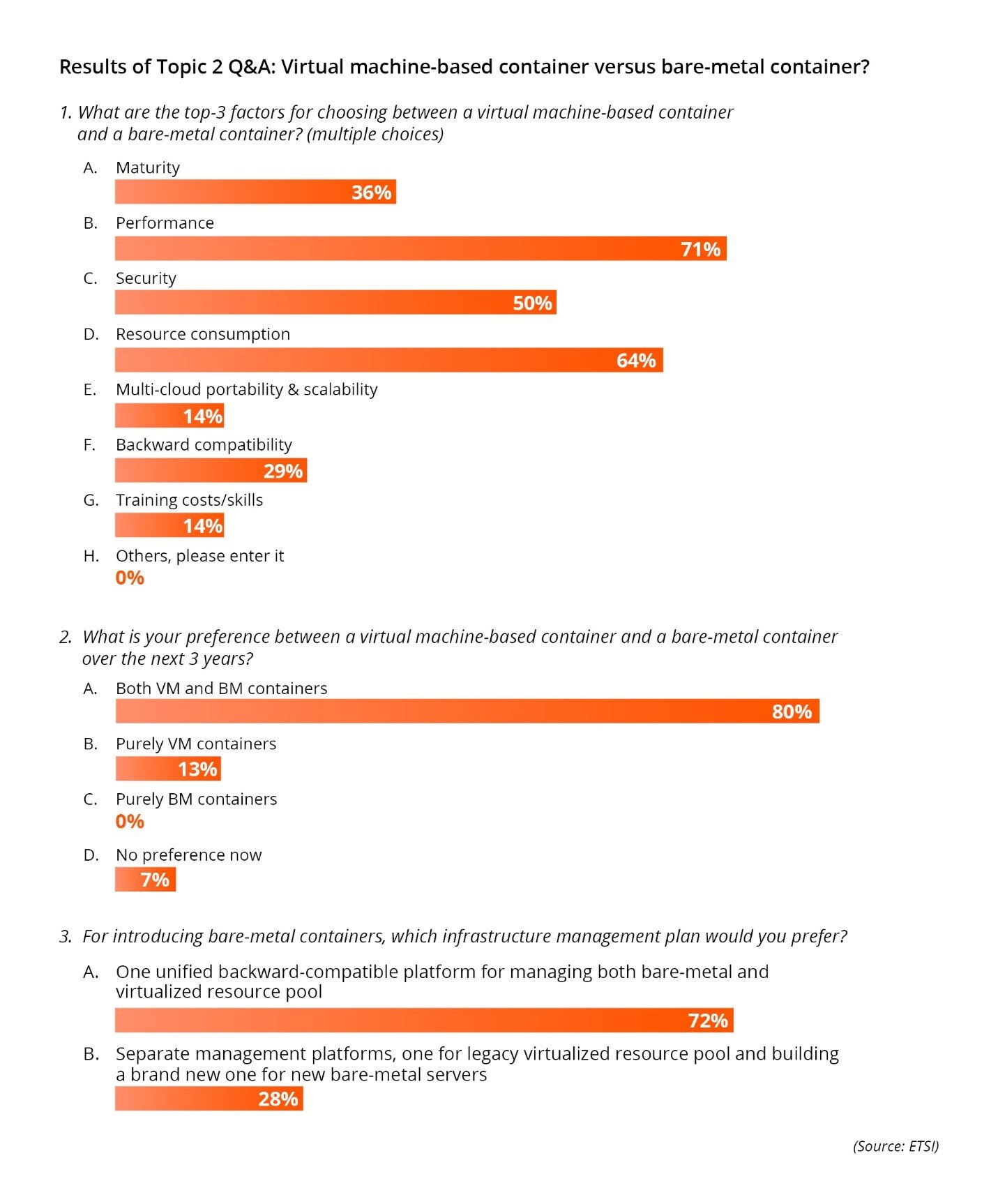
During the roundtable, there were presentations from China Telecom, China Mobile, China Unicom, SKT, AIS and NTT DOCOMO. Vendors like Huawei also joined the roundtable and actively discussed major pain points of today’s telco cloud and its future direction. It is evident that telcos do want to leverage opportunities in cloud-based microservices and network resource management, but it also has become clear that “challenges” remain. Three recurring themes were: 1) the best approach to implement containerization (i.e., Virtual Machine (VM)-based containers versus bare-metal containers); 2) the lack of End-to-End (E2E) automation; and 3) the friction and cost that is incurred from the presence of various incompatible fragmented solutions and products.
During the open discussion, there was debate as to how to promote telco cloud automation. Both operators and vendors recommended introducing methods like intent-driven Application Programming Interfaces (APIs). Moreover, from the perspective of a live network’s Operations and Maintenance (O&M) lifecycle, operators requested better observability to ensure network reliability. Considering the best approach to implement containerization, most attendees present suggested having a single unified backward compatible platform for managing both bare metal and a virtualized resource pool would be advantageous. Their top three concerns for choosing between VM-based containers and bare-metal containers are performance, resource consumption, and security.
ETSI and its stakeholders do seem to be making progress. ETSI ISG NFV has started work on Release 6, which will focus on: 1) new challenges, 2) architecture evolution, and 3) additional infrastructure work items. It would also be worthwhile to draw your attention to two whitepapers that ETSI announced during the round table: In the Light of Ten Years from the NFV Introductory Whitepaper and Evolving NFV towards the next decade.
 Dimitris Mavrakis
 Sam Bowling