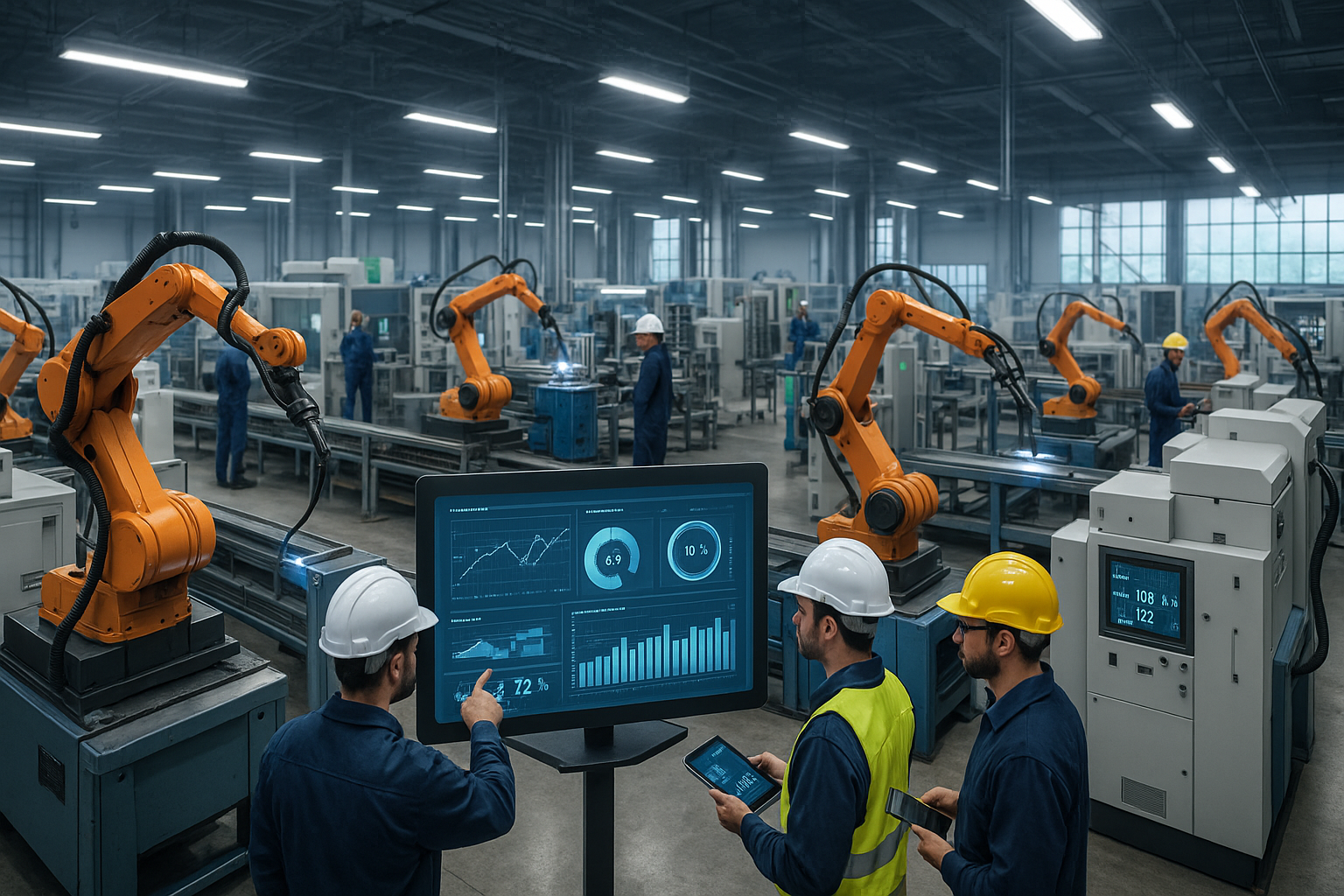
Extended Reality (XR) is transforming industries across the board, with annual shipments forecast to surpass 12 million by 2030. Aerospace manufacturing is a key sector where immersive solutions are making a striking difference. XR integration solves some of the aerospace industry's most pressing challenges, including design complexity, high iteration costs, and lengthy prototyping cycles. XR tools, such as Virtual Reality (VR) and Augmented Reality (AR), are being utilized by aircraft manufacturers to enhance collaboration, improve design accuracy, and reduce operational costs.
XR Deployment Best Practices for Aerospace Manufacturers
Dec 30, 2024 12:00:00 AM / by Eric Abbruzzese posted in Extended Reality (XR) Markets, Extended Reality (XR) Technologies
How Automakers Can Use XR to Enhance Vehicle Design and Customer Engagement
Dec 30, 2024 12:00:00 AM / by Matilda Beinat posted in Extended Reality (XR) Markets, Extended Reality (XR) Technologies
Every vehicle on the road started with an idea that was tested vigorously. This process has historically required Two-Dimensional (2D) models and physical prototypes. However, these tactics are archaic compared to the Extended Reality (XR) tools available to automakers today.
Best XR Adoption Path for Automotive Engineering and Design Teams
Dec 30, 2024 12:00:00 AM / by Matilda Beinat posted in Extended Reality (XR) Markets, Extended Reality (XR) Technologies
The automotive industry is undergoing a digital transformation born out of the necessity to address labor shortages and sensitive supply chain intricacies. Extended Reality (XR) is a key piece to this technical shift, reshaping how vehicles are designed and engineered. Integrating XR into automotive processes not only helps address ongoing challenges, but also opens doors to new opportunities in vehicle innovation. By streamlining design and enhancing collaboration with XR, automakers can ensure they stay top-of-mind in a market with a sizable appetite for innovative features.
Seven Telecom Trends to Watch in 2026 and Beyond
Dec 23, 2024 12:00:00 AM / by Admin posted in 5G and Tech, 5G Markets, 6G & Open RAN, 5G & 6G Cloud-Native Systems, 5G, 5G Devices, Space Technologies & Innovation, eSIM & SIM Solutions, Telco AI, telecommunications
Author: Mark Lydon, Content Manager
Page updated 9/30/2025
Qualcomm Secures a Key Win in a Trial Against Arm: Redefining IP Rights in the Semiconductor Industry
Dec 23, 2024 12:00:00 AM / by Malik Saadi posted in Industrial & Manufacturing Markets, AI & Machine Learning
The Delaware jury's decision in favor of Qualcomm marks a pivotal moment in semiconductor industry licensing practices. Several key elements drove this outcome. Technical testimony proved crucial, particularly Dr. Annavaram's clear distinction between architecture licensing and implementation, showing only 1% commonality between Arm RTL and actual implementations. This technical clarity helped separate Arm's legitimate Intellectual Property (IP) rights from overreach in claiming ownership of independently developed innovations. The evidence of Qualcomm's substantial investment—US$1.4 billion for the NUVIA acquisition and maintaining a 300-strong engineering team—demonstrated genuine independent development, rather than mere IP exploitation.
Top Eight AI Trends for Technology Leaders in 2025
Dec 20, 2024 12:00:00 AM / by Admin posted in AI & Machine Learning
Artificial intelligence (AI) is rapidly transforming industries through generative models, predictive analytics, intelligent automation, and real-time decision-making. As machine learning (ML) algorithms, cloud infrastructure, and AI chipsets advance, 2025 promises to be a pivotal year for artificial intelligence adoption. Drawing from ABI Research insights, this blog highlights the top eight AI trends, including the rise of Agentic AI and the continued evolution of AI-powered hardware, wearables, enterprise solutions, and more.
5 Essential Features for Developing the Best Data Integration Tool
Dec 18, 2024 12:00:00 AM / by Yih-Khai Wong posted in Next-Gen Hybrid Cloud Solutions
The labyrinth of enterprise data has many tentacles. Data originates in various business units, from supply chain operations to customer service and human resources. All too often, critical information is siloed off, leading to poor business decisions. As companies increasingly leverage Artificial Intelligence (AI), robotics, data analytics, and other digital technologies, data are at risk of becoming even more fragmented. To overcome this challenge, technology providers like Amazon Web Services (AWS), Microsoft Azure, IBM, Denodo, Qlik, and Informatica offer data integration tools.
How Warehouses Can Transform Operations with Augmented Reality
Dec 16, 2024 12:00:00 AM / by Eric Abbruzzese posted in Supply Chain Management & Logistics, Extended Reality (XR) Markets, Extended Reality (XR) Technologies
Augmented Reality (AR) is revolutionizing how warehouses operate, bringing unparalleled efficiency and accuracy to daily tasks. By integrating hands-free AR technology, warehouse workers are provided with instructions in their line of sight. Not only does this enhance safety, but it also improves operations like vision picking, cycle counting, and inventory management. This blog post explores key use cases of AR in warehouses and provides actionable recommendations for organizations aiming to unlock the full potential of this technology.
Launching Into the Future of Satellite Technology with SpaceX’s Reusable Rockets
Dec 13, 2024 12:00:00 AM / by Andrew Cavalier posted in Space Technologies & Innovation
When Sputnik 1 successfully launched into space on October 4, 1957, it marked a Herculean moment in human history. After millennia of staring at the stars, we finally knew it was possible to launch continent-spanning communications and then mini-computer platforms into space to explore and provide vital intelligence about the Earth. The event also critically served as a launching pad for revolutionizing telecommunications and Earth Observation.
Contactless Ticketing Market: A Global Recovery in Progress
Dec 9, 2024 12:00:00 AM / by Phil Sealy posted in Digital Payment Technologies
The contactless ticketing market saw a significant recovery in 2023, growing 16% Year-over-Year (YoY) as it rebounded from the challenges of prior years. Microcontroller-based ticketing stood out with a 30.4% increase, driven by transit authorities replenishing inventories. While 2024 is expected to bring moderated growth due to overstocked supplies, the market is on track to return to pre-pandemic levels by 2025, with shipments forecast at 441 million units. These developments reflect the market's resilience and its readiness to adapt to emerging technologies and evolving consumer demands.