
Author: Mark Lydon, Senior Content Marketing Manager
For B2B marketers, the main theme at UNBOUND 2026 was unsurprisingly AI. It dominated keynotes across product innovations, Answer Engine Optimization (AEO), content creation, and more. Competitive differentiation increasingly belongs to those who adapt to how answer engines decide which brands to cite and mention.
Key Insights:
- AI search visibility is increasingly shaped by content structure. Pages with question-based headings, FAQ elements, clear summaries, and strong supporting statistics are more likely to earn citations.
- Brand visibility in answer engines now extends far beyond your own website. Earned media, analyst commentary, peer mentions, social content, and other third-party signals all influence whether AI platforms view your brand as credible.
- AI citations are highly volatile, so visibility must be maintained rather than assumed. Regular content updates and a steady stream of brand mentions are becoming core parts of the job.
- Few brands are mentioned consistently across ChatGPT, Claude, and Gemini today. That leaves a real opening for B2B tech marketers that combine strong owned content with digital PR, expert proof, and wider web presence.
HubSpot held its annual UNBOUND (formerly INBOUND) conference from September 16 to 18. After a short train ride and walk to the Thomas M. Menino Convention & Exhibition Center in Boston’s Seaport District, the event immediately felt much larger than when I last attended 2 years ago. More than 13,000 marketing and sales professionals attended, with many waiting over an hour just to get their badges.
As a marketer, my agenda mostly centered around AI search and AI-powered tools that drive pipeline. It was impossible not to find a session lacking an AI angle, even with social media-centric keynotes discussing AI dos and don’ts.
This blog examines the biggest standouts from UNBOUND 2026 and what they mean for B2B technology marketing teams devising AEO strategies.
Content Structure Strongly Impacts AI Search Visibility
If UNBOUND confirmed one thing, it’s that content structure matters more than ever in the AI era. On the Innovation Stage on Day 1, Director of Growth Marketing at Mercury, Aja Frost, shared one of the most important charts all week for marketers. A study across 80,000 URLs identified the factors that correlate most strongly with citations across answer engines.
The results:
1. Question headings
2. FAQ schema
3. External links (do-follow)
4. FAQ section
5. Descriptive H1
6. Statistics
7. Block quotes
8. TLDR sections
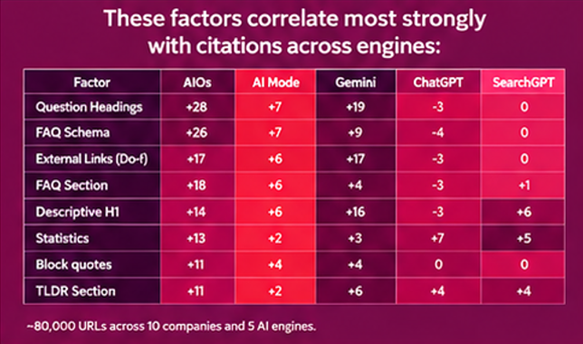
Many of these factors echo what we covered earlier in the year in the article “From SEO to AEO: What B2B Marketing Teams Must Do to Increase AI Search Visibility in 2026.” However, there is now verifiable data from a major marketing research hub quantifying their importance on a granular level.
It’s important to note that Google platforms (AIOs, AI Mode, and Gemini) show similar patterns across the board. ChatGPT, where 1 billion weekly users are asking questions, is a bit harder to figure out. According to the study presented, statistics and TLDR sections are most likely to earn citations in AI search.
Some of the factors above were also mentioned at the very last session I attended at UNBOUND, hosted by AI search pioneer Beeri Amiel (co-founder of XFunnel and Sr. Director of Product at HubSpot). A few other tips shared during this session for AEO included making clear/direct messages, consistently updating pages, and covering all stages of your sales funnel.
What to do:
- Consider using question-based subheads throughout your content. Write headings that match how buyers and practitioners actually search. Example: "How does fleet management software improve construction projects?” instead of “Fleet management software’s value in construction.”
- Add FAQ sections to high-value pages, then apply FAQ schema where it makes sense.
- Lead with a clear, descriptive H1 that states exactly what the page is about.
- Include relevant statistics, sourced data, and concise summaries to improve citation potential. Analyst firms such as ABI Research can provide market data and expert perspectives to support this initiative.
- Structure pages for easy extraction by AI tools. Use short sections, direct answers, and a key takeaways bullet list near the top.
You Must Earn Branded Web Mentions to Get Cited in AI
Perhaps the most strategic takeaway for me at UNBOUND 2026 was the need for a broader web presence. The stats are in: your own website accounts for 8% of AI citation source distribution. Earned media (30%) took the top spot, followed by peer sites (27%), and affiliate sites (11%). Even social media posts (9%) are sourced by answer engines more frequently than your own site.
Content marketing in 2026 and beyond entails far more than publishing blogs, case studies, and lead generation assets. It’s clear that job roles are expanding to digital PR, influencer marketing, affiliate marketing, and community relations. Receiving brand mentions from high-authority domains and research groups is key to being mentioned in answer engines.
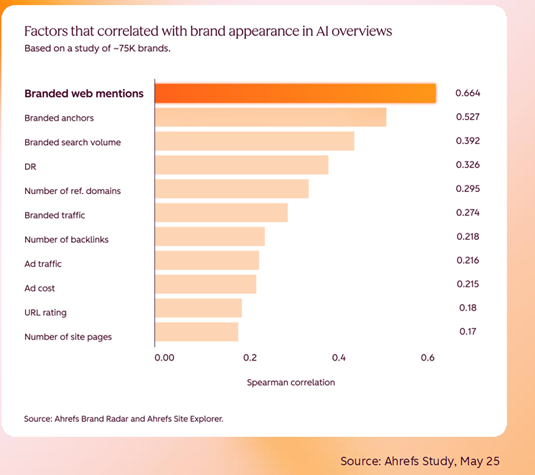
For these reasons, I expect more B2B tech brands to tap into the growing LinkedIn Creator Marketplace. These niche experts create User-Generated Content (UGC) that LLMs love to cite. In this sense, LinkedIn creators (including your own SMEs) are key to earning greater trust not just from potential buyers, but from the answer engines seeking a consensus. A regular cadence of press releases and guest posts from credible experts will also prove essential in AEO strategies.
These efforts would all be for naught if B2B marketers take a short-term approach. Even if your AI search visibility is strong today, there is no guarantee that it will last. Frost pointed out that 4 in 10 citations drop after 1 month. After 6 months, 7 in 10 disappear. In other words, answer engines are extremely volatile. Therefore, B2B brands must spend a lot more time updating older content than they are probably accustomed to. Additionally, securing long-term media relationships with industry experts helps your brand stay at the top of the conversation.
Some B2B marketing teams may already have the right skill sets in place to succeed in this new AI search era. However, others may need to take on new tasks/upskilling or hire new employees who excel in digital PR and influencer marketing.
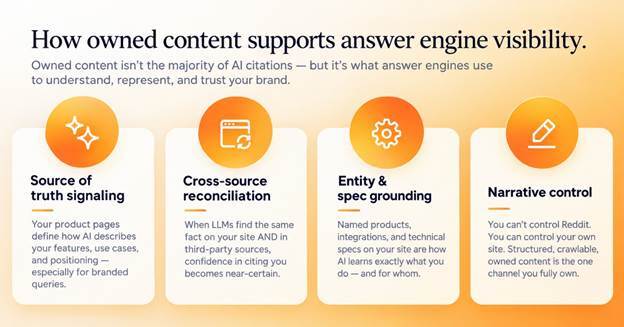
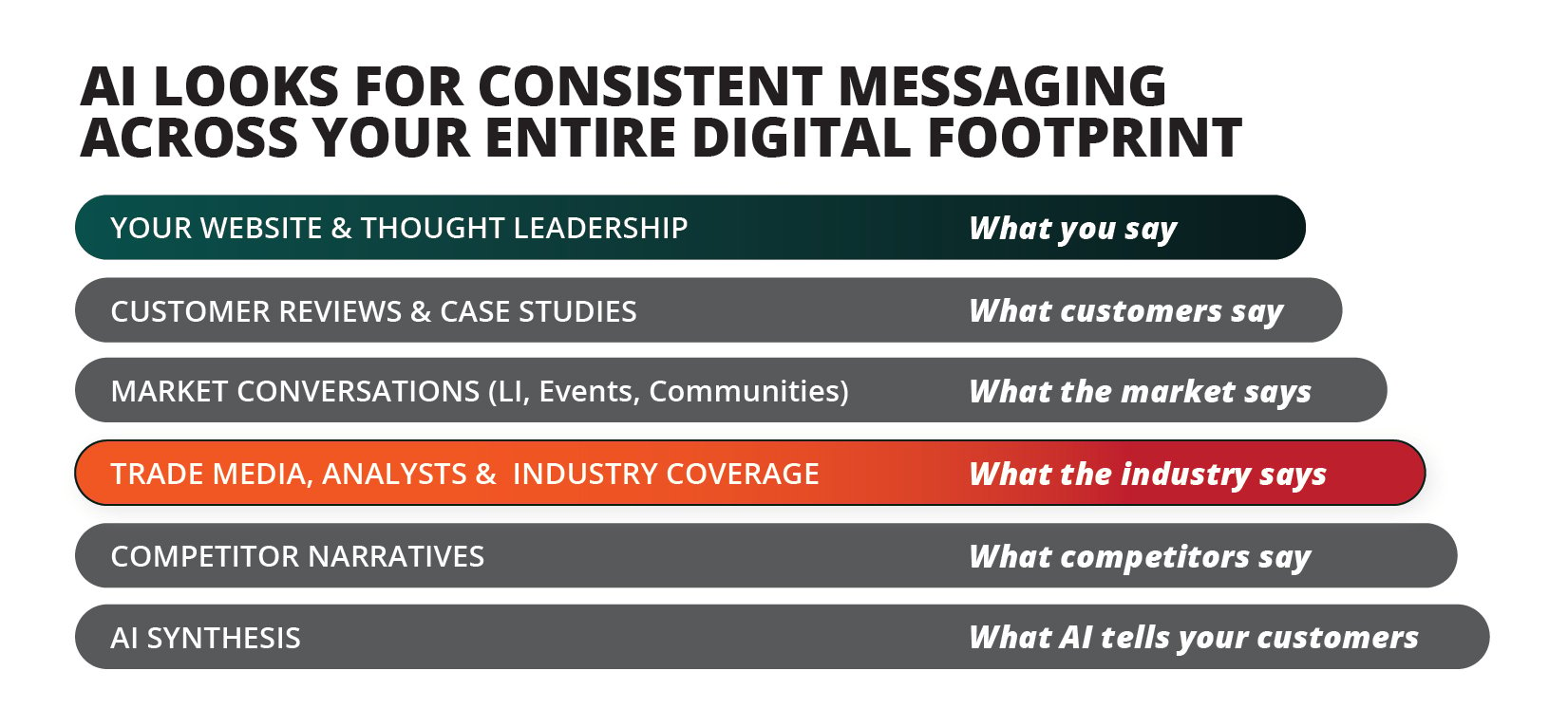
Despite the growing importance of brand web mentions, owned media is still crucial for AI search visibility. Your blogs, case studies, About Us page, and product/service pages all serve as the source of truth for answer engines. From there, LLMs look across third-party sources to verify that what you are saying on your own site is consistent across the wider web. Moreover, without rich, original content on your site, third-party sites are less likely to mention you. Without brand mentions, AI search engines won’t trust you.
Takeaway: Your website is your résumé, while web mentions are your references.
What to do:
- Build a branded mention engine. Invest in digital PR, guest posts, press releases, and influencer programs to increase citation-worthy coverage.
- Treat owned content as the source of truth. Keep product pages, case studies, blogs, and About pages accurate, original, and aligned with third-party mentions.
- Plan for constant refreshes. AI citations are constantly fluctuating, so update older content regularly and close skill gaps in PR, influencer marketing, and community-building.
FAQS
How can B2B brands get cited in AI search?
B2B brands can improve their chances of being cited by publishing clear, original content backed by statistics and expert insights. Third-party mentions from earned media, peer websites, social media, and other trusted sources also help establish credibility with AI platforms.
What content structure improves AI search visibility?
Question-based headings, FAQ sections, descriptive H1s, statistics, and TLDR summaries are strongly associated with AI search citations. Short sections and direct answers also make information easier for answer engines to understand and extract.
Why are brand mentions important for Answer Engine Optimization (AEO)?
AI platforms look beyond a company’s website when deciding which brands and sources to trust. Mentions across earned media, peer websites, social media, and other third-party sources can reinforce what a brand says on its own website and increase its visibility in AI search.
How can B2B marketers improve visibility across ChatGPT, Gemini, and Claude?
B2B marketers should combine strong owned content with digital PR, expert commentary, social content, and other third-party mentions. They should also regularly update existing pages because AI citations can change or disappear over time.
AEO Dominance Is Rare Today; B2B Marketers Have an Opportunity to Run the Table with the Right Content Strategy
During his Winning AI Search: Close the Gaps That Cost You Customers session, Dale Bertrand of Fire&Spark referred to an interesting Harvard Business Review study. It found that just 8% of brands appear consistently across ChatGPT, Claude, and Gemini.
This reflects both the challenge of earning citations across answer engines and a substantial opportunity to establish competitive differentiation. The odds are your competitors have limited visibility across all AI search platforms. Tech marketers like yourself can bypass them by following the AEO best practices uncovered at UNBOUND 2026. Complement your original, data-driven owned content with a broader mix of industry recognition, user reviews, and UGC. And track the golden prompts that buyers are typing in when evaluating brands.
This is where analyst firms like ABI Research can fill a crucial content gap for B2B technology marketing teams. We provide a neutral, expert-based evaluation of tech vendors’ products and services across 30+ niches to help educate buyers and industry stakeholders alike. Learn more about how we support global technology leaders’ flagship marketing campaigns.