

Actionable Benefits
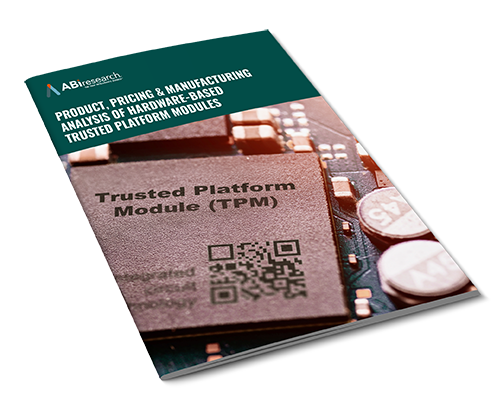
- Identify the market trajectory for discrete and integrated Trusted Platform Modules (TPMs), including growth constraints, pricing pressure, and long-term competitiveness.
- Optimize vendor selection by understanding the pricing tiers, certification-based premiums, and manufacturing geographies of major TPM suppliers.
- Develop informed sourcing strategies based on current and future impacts of global semiconductor incentives (U.S. CHIPS Act, European Chips Act) designed to diversify manufacturing away from Asia-Pacific.

Research Highlights
- Market segmentation and quantitative forecasts for TPM shipments and revenue from 2025 to 2030, including ASP trends for discrete and integrated devices.
- Comparative analysis of six major TPM vendors: Infineon, Microchip, NSING/Nations, Nuvoton, SEALSQ, and STMicroelectronics, covering flagship products, legacy portfolios, pricing positions, manufacturing footprints, and timelines.
- Examination of global manufacturing trends for TPMs, with Asia-Pacific dominance gradually eroding as Europe and the United States incentivize domestic semiconductor expansion.
- Overview of market stagnation factors: declining PC demand, price erosion, competition from Secure Elements (SEs) and secure Microcontroller Units (MCUs), and the lack of revenue-generating remote-update capabilities within TPMs.

Critical Questions Answered
- What are the differences, strengths, and market shares of discrete versus integrated TPMs?
- How will TPM Average Selling Prices (ASPs) evolve, and what factors are driving price erosion or premium pricing?
- How are supply chain shifts, government incentives, and geopolitical pressures affecting TPM manufacturing and vendor strategies?
- Which vendors lead the TPM market today, and how do their portfolios differ across Personal Computer (PC), industrial, automotive, and Internet of Things (IoT) segments?

Who Should Read This?
- Product managers, security architects, and hardware design teams at PC, server, industrial, and IoT device manufacturers evaluating secure hardware options.
- Semiconductor sourcing, procurement, and supply chain strategists assessing TPM vendors, pricing stability, and manufacturing risk.
- Government agencies, regulators, and policymakers concerned with secure hardware resilience, domestic manufacturing capacity, and supply-chain sovereignty.
- Cybersecurity strategists and Chief Information Security Officers (CISOs) in sectors relying on TPM-backed device identity, secure boot, attestation, and platform integrity.
- Investors and competitive-intelligence teams following semiconductor security trends and the evolution of trusted hardware markets.
Companies Mentioned






Related Insights

The Geopolitical Semiconductor Cold War: Challenges and Impacts of Onshoring Manufacturing
Insight | 4Q 2024 | IN-7584
Related Research

Challenges & Opportunities in the TPM Market
Presentation | 1Q 2026 | PT-3972

Assessing the Impact of COVID-19 on the Embedded Security Market
Presentation | 2Q 2020 | PT-2378

Digital Authentication & Embedded Security Market Data Overview: 3Q 2026
Presentation | 3Q 2026 | PT-3577