
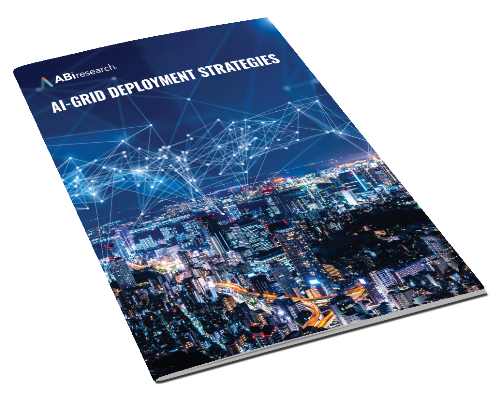

Actionable Benefits
- Evaluate when distributed Artificial Intelligence (AI) infrastructure creates enough business value to compete with centralized hyperscaler AI infrastructure.
- Focus AI grid investments toward centralized and regional inference opportunities before committing capital to Radio Access Network (RAN)-level accelerated compute deployments.
- Prioritize enterprise and industrial AI use cases where latency, data sovereignty, or reduced data movement can justify deployments.

Research Highlights
- Assessment of AI grid economics, including cost-per-token, Graphics Processing Unit (GPU) utilization, power and cooling costs, workload density, latency value, and comparisons with centralized hyperscaler infrastructure.
- Evaluation of telco monetization options, including site leasing, direct GPU-based compute services, bundled compute and network services, and AI application platforms with Application Programming Interfaces (APIs), orchestration, and metering.

Critical Questions Answered
- How can telcos avoid being limited to low-margin infrastructure roles while hyperscalers capture most of the AI value chain?
- What role will orchestration play in making distributed AI infrastructure economically viable?
- Which enterprise, industrial, regulated, and consumer use cases are most likely to drive demand for distributed AI infrastructure?

Who Should Read This?
- Telco and infrastructure strategists who need to determine how existing data center, central office, exchange, and edge assets can support AI grid revenue opportunities.
- Operators assessing whether to lease sites, deploy GPUs, bundle AI inference with connectivity, or build AI application platforms.
- AI infrastructure vendors, networking suppliers, and orchestration platform providers with solutions for distributed AI workload placement, billing, and Service-Level Agreements (SLAs).
Companies Mentioned






Related Insights

Hyperscalers Tap Neoclouds to Run Internal AI Workloads
Insight | 3Q 2025 | IN-7935

From Petro Capital to Data Capital: The Gulf States' Strategic Pivot Toward AI and Next-Generation Data Centers
Insight | 2Q 2025 | IN-7826

What the OCUDU Ecosystem Foundation Means for Telecoms Industry Sovereignty and the Future of Open Networks
Insight | 2Q 2026 | IN-8159
Related Research

How Telcos Can Prepare Their Infrastructure for 6G
Report | 3Q 2026 | AN-6574

Green Urban Infrastructure
Presentation | 4Q 2022 | PT-2628

6G Deployment Scenarios: From a Simple Radio Upgrade to Distributed AI Infrastructure
Presentation | 3Q 2026 | PT-4020