
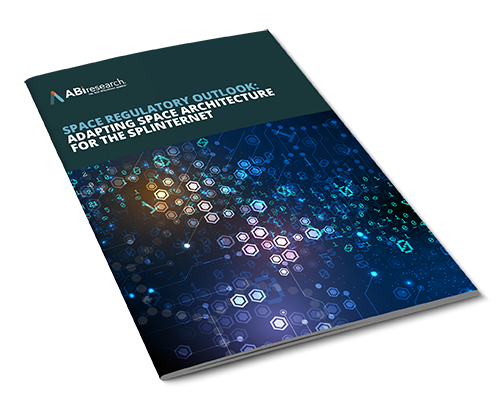

Actionable Benefits
- Space “Splinternet” Navigation Strategies: A strategic framework for assessing market entry risks across the three geopolitical "moats" (Washington, Brussels, Beijing), enabling operators to capture growth in "swing states" (e.g., India, Brazil) without compromising their core Western compliance.
- Architecting the "Sovereign Switch": Technical guidance on implementing Software-Defined Satellite (SDS) features—such as beam nulling, frequency slaloming, and orbital edge computing—to convert complex legal mandates into automated, compliant engineering specifications.
- Supply Chain Resilience (the "Two-SKU" Model): A roadmap for bifurcating supply chains into "secure" (NATO-aligned) and "commercial" (Global South) tiers, allowing enterprises to minimize "compliance latency" and navigate conflicting export controls (International Traffic in Arms Regulations (ITAR) versus European Union (EU) Space Law).

Research Highlights
- The "Regulatory Triad" & "Splinternet" Frameworks: A proprietary geopolitical model and global sovereignty map that defines the three power blocs (Washington, Brussels, Beijing) and classifies markets into Green (trust), Yellow (compliance), and Red (gateway mandate) zones to predict future market access.
- Strategic Playbooks for a Fragmented Era: A technical and operational roadmap for surviving the "new space" reality, featuring specific architectures for the "sovereign switch" (on-orbit compliance) and strategies for supply chain bifurcation (blue stack versus red stack) to navigate conflicting export controls.

Critical Questions Answered
- Geopolitical Fragmentation: How will the "triad" of competing regulatory regimes—Washington (innovation), Brussels (law), and Beijing (control)—fundamentally fracture the global addressable market for space services?
- Compliance Architecture: What specific technical capabilities (e.g., the "sovereign switch," orbital edge computing) are required to automate compliance with conflicting data residency laws and "gateway mandates" in real time?
- Supply Chain Strategy: How can manufacturers implement a "two-SKU" strategy to simultaneously serve U.S. Defense clients (blue stack) and Global South markets (red stack) without violating ITAR or EU Space Law?
- Market Entry Risks: What are the hidden "regulatory latency" barriers in critical "swing state" markets (e.g., India, Brazil, Vietnam), and how do local ownership rules (51% Joint Venture (JV) mandates) impact launch timing?
- The "Splinternet" Impact: How do "red zone" markets (like China and Russia) enforce "digital borders" in orbit, and what are the legal and technical risks of using Inter-Satellite Links (ISLs) over these territories?
- Future Cost: How will the "weaponization of physics" (EPFD limits) at WRC-27 and new "green gatekeeper" norms structurally alter the cost-per-bit economics for next-generation Low Earth Orbit (LEO) constellations?
- Investment Alpha: As raw bandwidth becomes commoditized, how does value shift to the "geopolitical middleware" layer, and which orchestration platforms are best positioned to manage the complexity of a fragmented orbital mesh?

Who Should Read This?
- Satellite Operators & Constellation Owners: Strategists needing to navigate the "triad" of regulatory regimes, optimize architecture for WRC-27 EPFD limits, and implement "sovereign switch" capabilities to secure landing rights in fragmented markets.
- Aerospace Manufacturers & Original Equipment Manufacturers (OEMs): Product leads facing the "bifurcation tax" who need to design dual-supply chains ("blue stack" versus "red stack") and integrate "confidential edge" computing to bypass export controls.
- Government Regulators & Policymakers: Officials in "swing states" (e.g., India, Brazil, UAE) seeking to enforce digital sovereignty via "gateway mandates" and "sovereign containers" without losing access to Western innovation.
- Defense & Intelligence Agencies: Commanders assessing the security implications of the "Splinternet," the risks of "innocent passage" via optical links, and the shift from "plausible deniability" to "total attribution" in orbit.
- Institutional Investors & VCs: Financial stakeholders looking to pivot their thesis from "commodity bandwidth" (launch) to "geopolitical middleware" (orchestration & compliance), where the next layer of alpha resides.
- Global Enterprise Leaders: Technology leaders who must insure their global IoT/data networks against "regulatory latency" and ensure their traffic does not get trapped in "geometric tromboning" loops over hostile territories.
Companies Mentioned








Related Insights

India’s Telecom Bill Magnifies NTN and TN Spectrum Tensions
Insight | 4Q 2022 | IN-6747

Mergers, Mergers, Mergers: How Lynk and Omnispace Birthed Elveo Mobile
Insight | 3Q 2026 | IN-8258
2026 Will Mark a Turning Point for Direct-to-Cellular (D2C) Satellite Connectivity
Insight | 1Q 2025 | IN-7671
Related Research

Asset Visibility: Pharma Industry Track and Trace Regulations in Europe
Presentation | 1Q 2022 | PT-2570

Preparing for Global Climate Disclosure Regulations
Presentation | 3Q 2023 | PT-2742

D2C Market Outlook and Forecasts: Use Cases, Regulatory Outlook, and Market Maturity
Presentation | 2Q 2026 | PT-4040