NEWS
T-Mobile SuperBroadband Launches
|
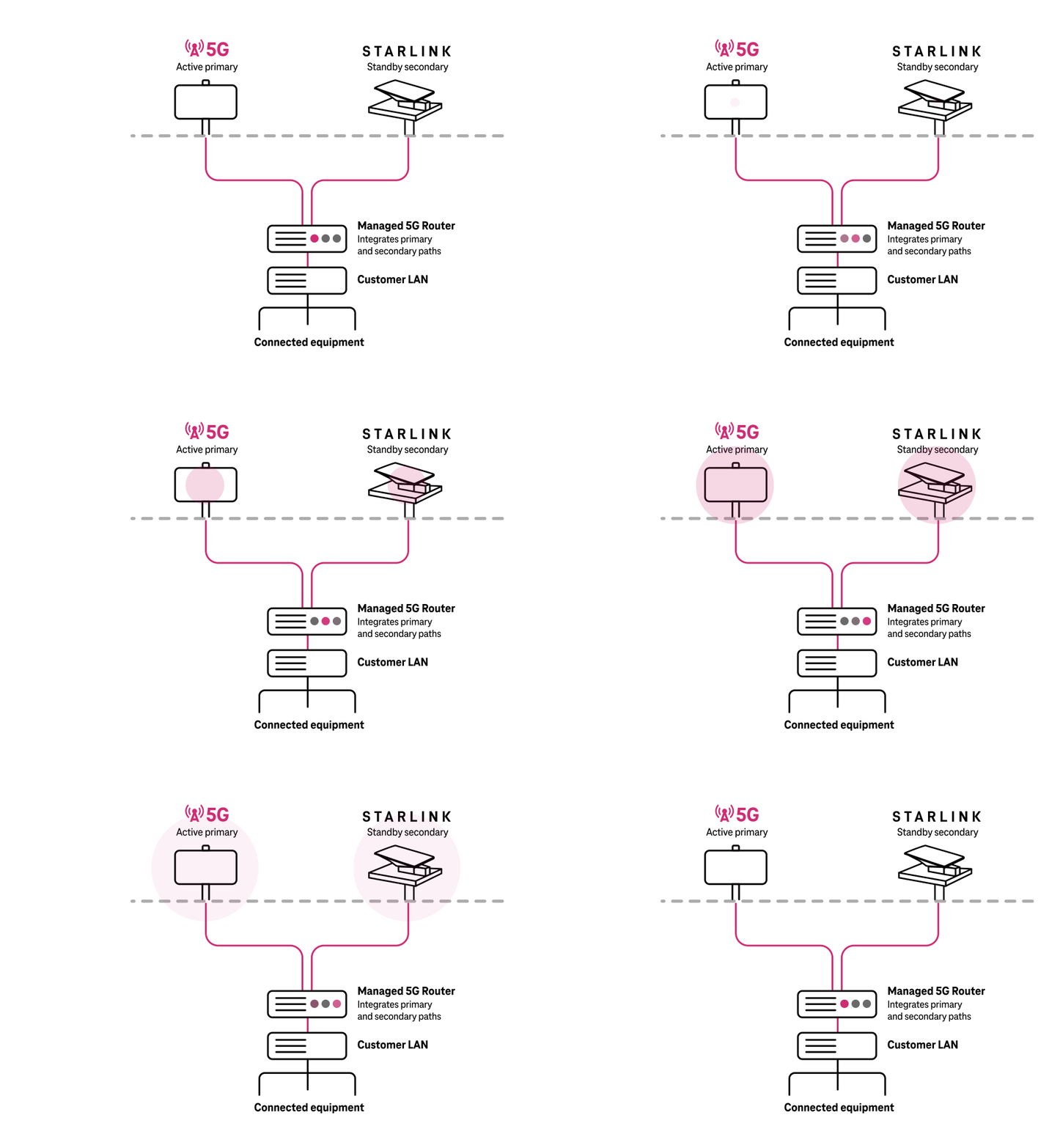
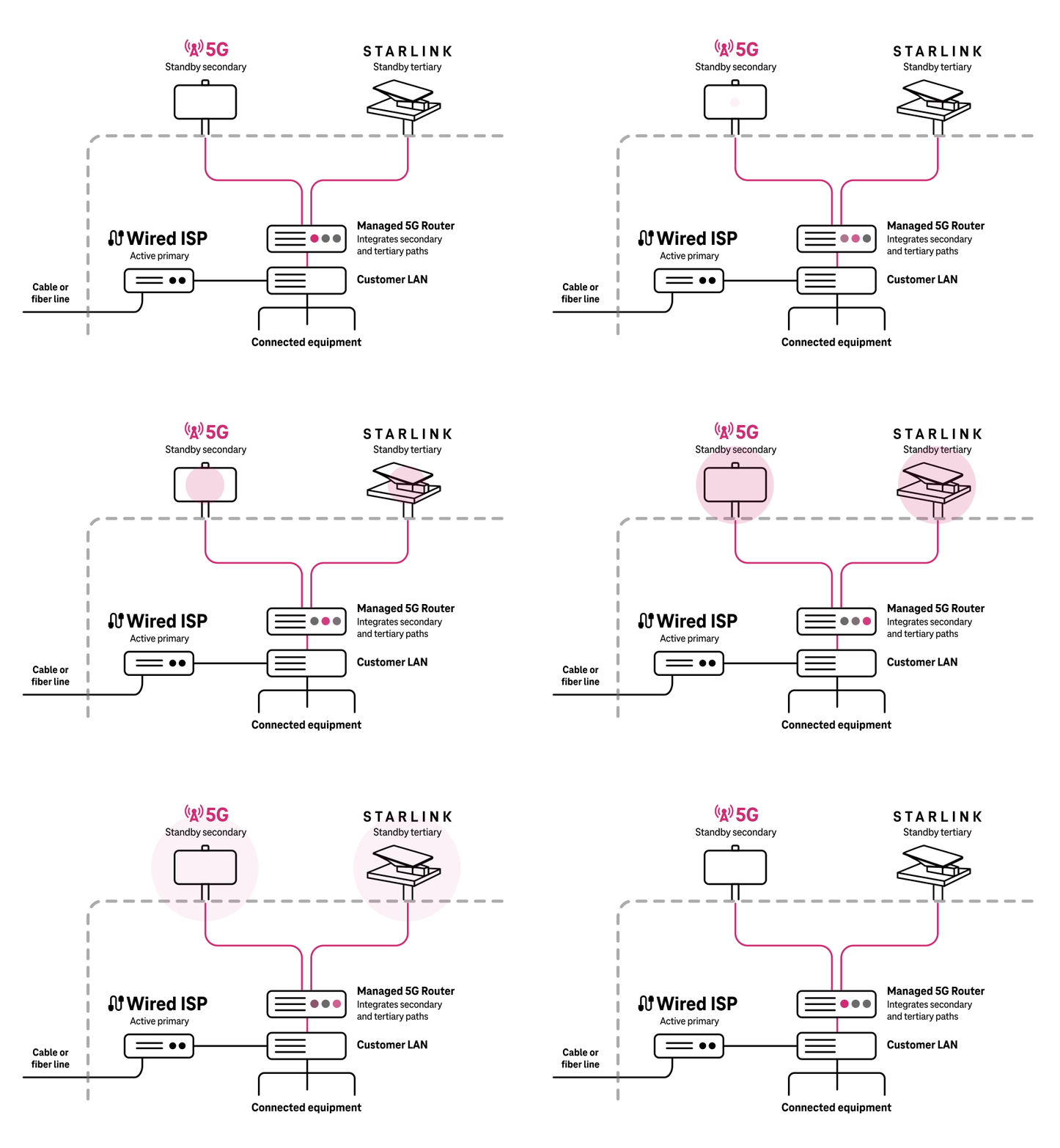
T-Mobile launched its business Internet service, SuperBroadband, on April 28, 2026. The service pairs its 5G network with SpaceX’s Starlink broadband system for backup. SuperBroadband is marketed as one product, with T-Mobile 5G acting as a primary connection alongside Starlink as a backup or for load balancing. Satellite-only operation appears only as a fallback for 5G-ineligible addresses in the terms, not as an advertised plan. The service starts at US$250/month and uses Ericsson Cradlepoint routers and outdoor adapters managed through Ericsson Enterprise Wireless Solutions' NetCloud Manager platform.
Figure 1: T-Mobile SuperBroadband Architecture
(Source: T-Mobile)
IMPACT
Commoditization of the Access Layer and Ecosystem Arms Race
|
The emergence of SuperBroadband points toward the commoditization of the access layer. By combining terrestrial 5G and satellite into one contract, one bill, and one managed router, T-Mobile is betting that enterprises increasingly treat connectivity as a utility. Enterprises want the service to stay up and no longer care whether the bits arrive via a tower or from orbit, much as businesses care that the lights come on, not which power plant generated the electricity. That indifference is reflected in SuperBroadband’s unified packaging.
This also shifts where value sits. As the access medium becomes invisible to the customer, advantage migrates away from owning any particular network and toward owning the layer that orchestrates them and holds the billing relationship. This is precisely the role T-Mobile has claimed, while Starlink supplies the connectivity underneath. The "just works" promise is a customer-experience story on the surface and a value-chain story beneath it.
The thesis for this solution in the market is sound. Heterogeneity itself is a documented source of long-term pain for enterprises across healthcare facilities, warehouses, distribution centers, manufacturing plants, and corporate office buildings. Each additional connectivity vendor is another contract, another management console, and another failure point. A single managed service that fuses 5G and satellite under one bill is, in effect, a direct answer to these challenges.
Value is transitioning toward the orchestration-and-billing layer, rather than the network beneath it, so SuperBroadband will become a template that others copy. Amazon Leo is already in enterprise beta with commercial launch targeted for mid-2026, and its beta roster reads like a list of T-Mobile's rivals: Verizon and AT&T in North America, Vodafone in Europe, with terminals delivering up to 1 Gigabits per Second (Gbps) for enterprise users. Verizon's arrangement points to the same convergence logic at SuperBroadband; the difference is what sits behind Amazon: a hyperscale cloud (AWS), a consumer-devices and services ecosystem, and pending Globalstar acquisition, with its own spectrum and Direct-to-Device (D2D) ambitions.
A Verizon-Amazon hybrid would not merely match T-Mobile's "just works" packaging; it could bundle connectivity into the cloud and enterprise-software relationships Amazon already owns. The same convergence logic extends to Apple's Globalstar-based satellite features on the device side. The competitive question that SuperBroadband raises, then, is not whether hybrid terrestrial-satellite connectivity becomes standard; it is who owns the integration layer when it does, and how much of the surrounding ecosystem they can pull through it. The partner behind T-Mobile is not standing still: with a Nasdaq listing reportedly slated for mid-2026 and its February 2026 absorption of xAI into a vertically integrated aerospace-AI entity, SpaceX is itself assembling an ecosystem to contest that integration layer directly, rather than merely supplying connectivity beneath it.
Given these evolutions, ABI Research expects a positive upswing in its base forecast of roughly 8 million enterprise and government satellite broadband subscriptions by 2030.
RECOMMENDATIONS
Own the Integration Layer, Not Just the Pipe
|
For carriers, the lesson that is emerging from the launch of SuperBroadband is that owning spectrum and terrestrial infrastructure alone is no longer sufficient to differentiate and defend enterprise connectivity revenue. That position is moving to the orchestration-and-billing layer under a single contract, single bill, and managed experience that renders the underlying network invisible to end users. Carriers that treat satellite as a bolt-on coverage patch, rather than as an integrated path within a unified managed service, risk being reduced to a wholesale input in someone else's bundle.
Telcos should move quickly to secure a satellite partnership and own the integration layer on top of it; e.g., the routing intelligence, the Service-Level Agreements (SLAs), the monitoring portal, and the customer relationship. Whoever controls that layer captures the margin, not whoever supplies only the pipe. Amazon Leo is poised to enter the market and a newly capitalized SpaceX is assembling its own ecosystem, so the satellite layer is no longer a neutral input, it’s also a potential competitor for control of the integration layer. The carriers that act now to own the experience, rather than rent it, will be those still setting the terms when hybrid connectivity becomes the default.